Father Goose
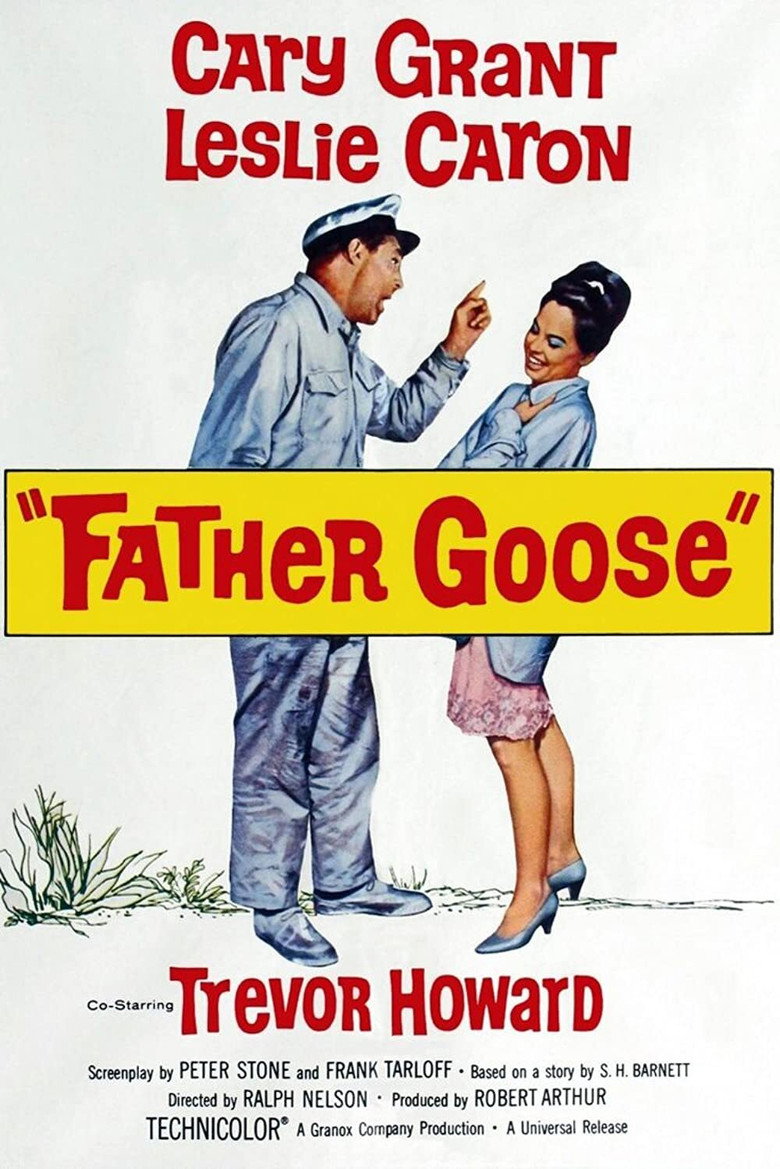
Cary Grant stars as Walter Eckland, a reluctant coast watcher whose isolated island life is transformed by a schoolteacher and seven children during World War II.
Editorial ratings
- Cary Grant
- Story
- Direction
- Cinematography
- Entertainment
- Historical importance
During World War II, South Sea beachcomber Walter Eckland is persuaded to spy on planes passing over his island. He gets more than he bargained for as schoolteacher Catherine Frenau arrives on the run from the Japanese with her pupils in tow!
Cary Grant plays Walter Christopher Eckland, under the direction of Ralph Nelson, released in 1964.
Featured quote
“Walter Eckland reveals Cary Grant's warmth, compassion, and emotional maturity more completely than perhaps any other role in his career.”
Introduction
Grant abandons his polished persona for one of his most authentic performances as Walter Eckland.
The Story
A solitary coast watcher reluctantly shelters a French teacher and seven children, discovering purpose through protecting others.
Production & Behind the Scenes
Produced by Granart and Universal, directed by Ralph Nelson, filmed on location in Jamaica, and winner of the Academy Award for Best Original Screenplay.
Cary Grant's Performance
Grant delivers a restrained, deeply human performance that earned his only competitive Academy Award nomination.
Ralph Nelson's Direction & Themes
Themes include responsibility, chosen family, ordinary heroism, freedom versus commitment, and emotional growth.
Historical Context
Inspired by the real Allied coast watchers of World War II and reflecting changing cinematic views of heroism.
Legacy & Influence
One of Grant's most beloved later films and an enduring family classic.
Gallery
Production & release
1964
Filmed in Jamaica.
December 1964
Released by Universal.
1965
Wins Oscar for Best Original Screenplay; Grant nominated for Best Actor.
1970
Grant receives Honorary Academy Award.
Today
Recognized as one of Grant's finest late-career films.
Collaborators.
Leslie Caron was born in 1931 near Paris, France, to a French father and an American mother who had herself been a dancer, and trained rigorously in ballet from childhood, joining the Ballet des Champs-Élysées as a teenager. She was discovered there by Gene Kelly, who cast her opposite himself in An American in Paris (1951), her film debut, which made her an international star at nineteen. She followed with a run of MGM musicals built around her dancing, most notably Lili (1953), for which she received an Academy Award nomination for Best Actress, and Gigi (1958), directed by Vincente Minnelli. In 1964 she starred opposite Cary Grant in Father Goose, a wartime comedy-adventure in which Grant played a boozy beachcomber recruited as a coastal lookout who is joined by Caron's stranded French schoolteacher and her young charges; the film won the Academy Award for Best Original Screenplay. Caron actively sought to move beyond musicals into dramatic work, succeeding notably in The L-Shaped Room (1962), for which she won the BAFTA Award for Best Actress and received a further Academy Award nomination, playing a pregnant, unmarried woman in a London boarding house. She continued working in film, television, and theatre across subsequent decades, including work in France, and later wrote two volumes of memoir. Caron remains active into her nineties as one of the last surviving major stars of the classic MGM musical era. She is remembered both as the ballet-trained ingenue who defined a genre and as an actress who successfully reinvented herself in serious drama once the musical era faded.
Peter Stone was born in Los Angeles in 1930, the son of film producer John Stone, and became one of the few writers to move fluently between Broadway, television and Hollywood screenwriting at the highest level. He remains the only writer in history to win a competitive Academy Award, a Tony Award and an Emmy Award. Stone wrote two of the sharpest vehicles of Grant's final screen decade. Charade (1963), directed by Stanley Donen, gave Grant a role built around his age rather than around it — a man aware that he is nearly two decades older than Audrey Hepburn's character and openly uneasy about it, a joke Stone wrote directly into the dialogue. Father Goose (1964) went further, casting Grant as a scruffy, drunken South Pacific island-watcher rather than a polished leading man, and it won Stone the Academy Award for Best Original Screenplay (shared story credit with Frank Tarloff and S. H. Barnett). Grant himself called it one of his favorite performances precisely because it broke from the tailored image Stone knew audiences expected of him. Beyond his work with Grant, Stone wrote the book for the Broadway musical 1776 (1969), which won the Tony Award, and later the screenplay for The Taking of Pelham One Two Three (1974), a tense New York subway-hijack thriller far removed in tone from his comedies. His versatility across genres and media was unusual even by the standards of prolific studio-era writers. Stone died in Los Angeles in 2003. His two Grant scripts are still regularly cited as giving the actor his best and most self-aware late material.
Cast.
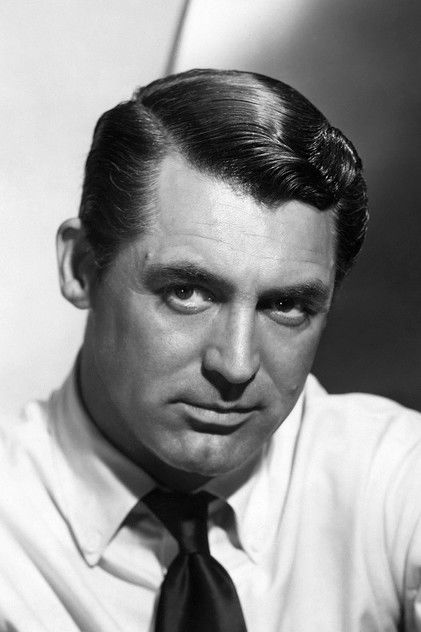
Cary Grant as Walter Christopher Eckland
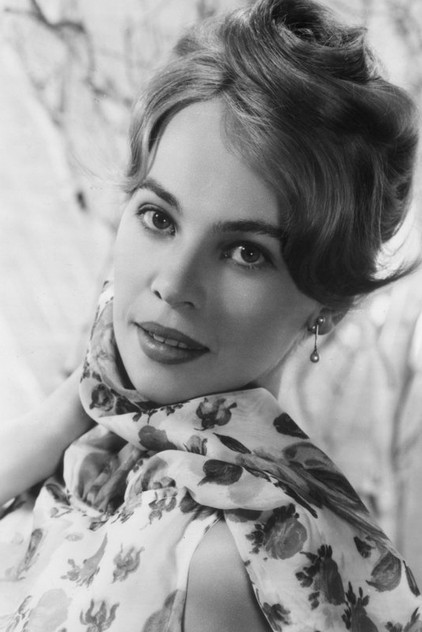
Leslie Caron as Catherine Freneau
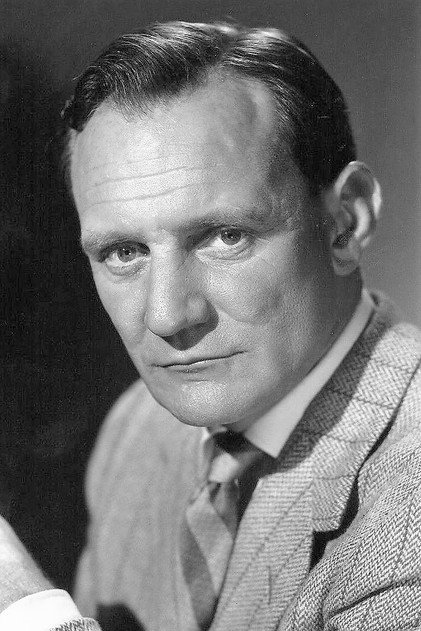
Trevor Howard as Commander Frank Houghton
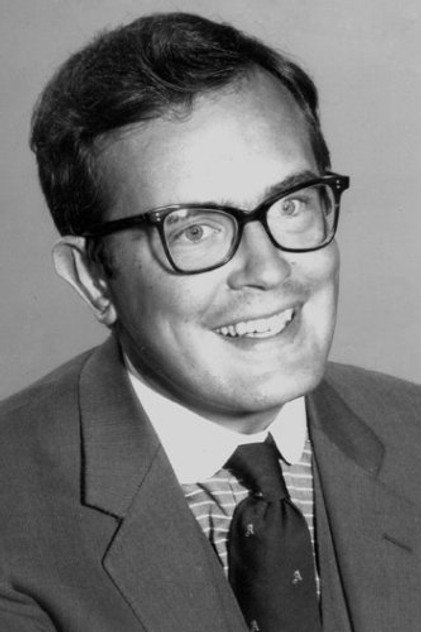
Jack Good as Lieutenant Stebbings
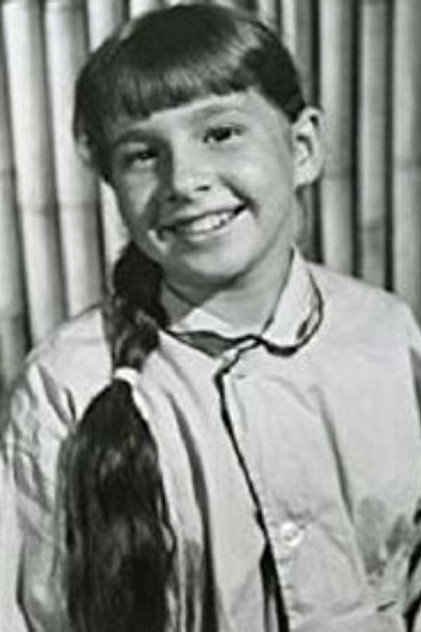
Pip Sparke as Anne
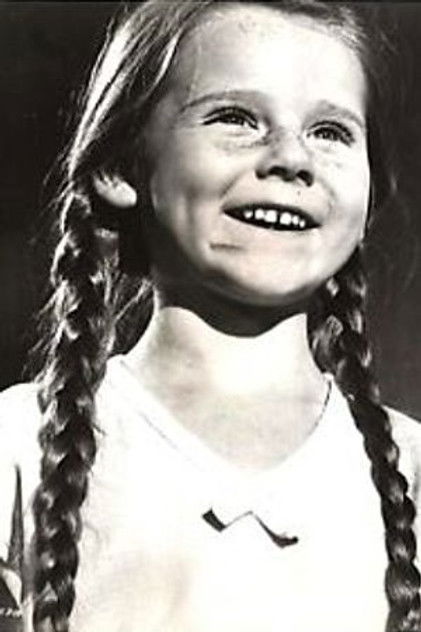
Verina Greenlaw as Christine
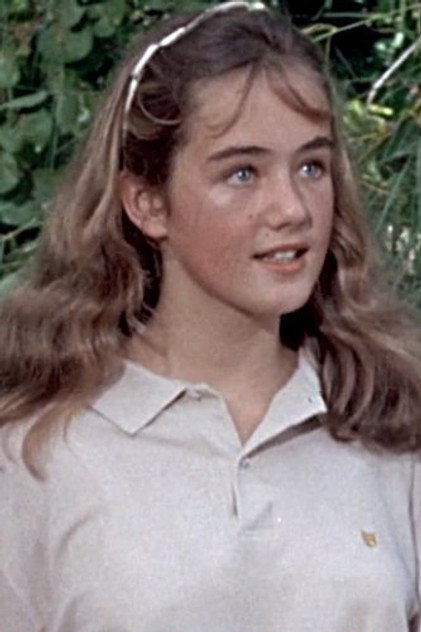
Stephanie Berrington as Elizabeth Anderson
Full billed cast of Father Goose (1964).
Players in billing order, with the characters they play.
- Cary Grantas Walter Christopher Eckland
- Leslie Caronas Catherine Freneau
- Trevor Howardas Commander Frank Houghton
- Jack Goodas Lieutenant Stebbings
- Sharyl Lockeas Jenny
- Pip Sparkeas Anne
- Verina Greenlawas Christine
- Stephanie Berringtonas Elizabeth Anderson
- Jennifer Berringtonas Harriet MacGregor
- Laurelle Felsetteas Angelique
- Nicole Felsetteas Dominique
- Alex Finlaysonas Doctor Bigrave
- Peter Forsteras Chaplain
- Frank Maroccoas Accordionist
- John Napieras Lt. Cartwright
- Simon Scottas Captain of Submarine, USS Sailfin
- Don Spruanceas Navigator
- Ken Swoffordas Helmsman, Submarine USS Sailfin
- Richard Lupinoas Radioman
Crew.
- Art DirectionAlexander Golitzen
- Art DirectionHenry Bumstead
- Costume DesignRay Aghayan
- DirectorRalph Nelson
- Director of PhotographyCharles Lang
- EditorTed J. Kent
- Original Music ComposerCy Coleman
- ProducerRobert Arthur
- ScreenplayPeter Stone
- ScreenplayFrank Tarloff
- StoryS. H. Barnett
Quotations from Father Goose
The Quotebook →A quiet dispatch,
once a month.
One considered essay in your inbox each month. No promotions, no algorithms, no forwarding. Unsubscribe with a single click.
Other studies.
Cary Grant and Deborah Kerr headline an elegant romantic comedy exploring whether the perfect partner exists—or whether perfection itself is an illusion.
A thoughtful wartime satire blending romance, comedy, and commentary on celebrity culture.
Cary Grant and Audrey Hepburn create one of cinema's most elegant romantic mysteries—a thrilling game of deception, danger, and unexpected love.