I'm No Angel
A carnival lion tamer rises to New York society and is torn between the men who court her.
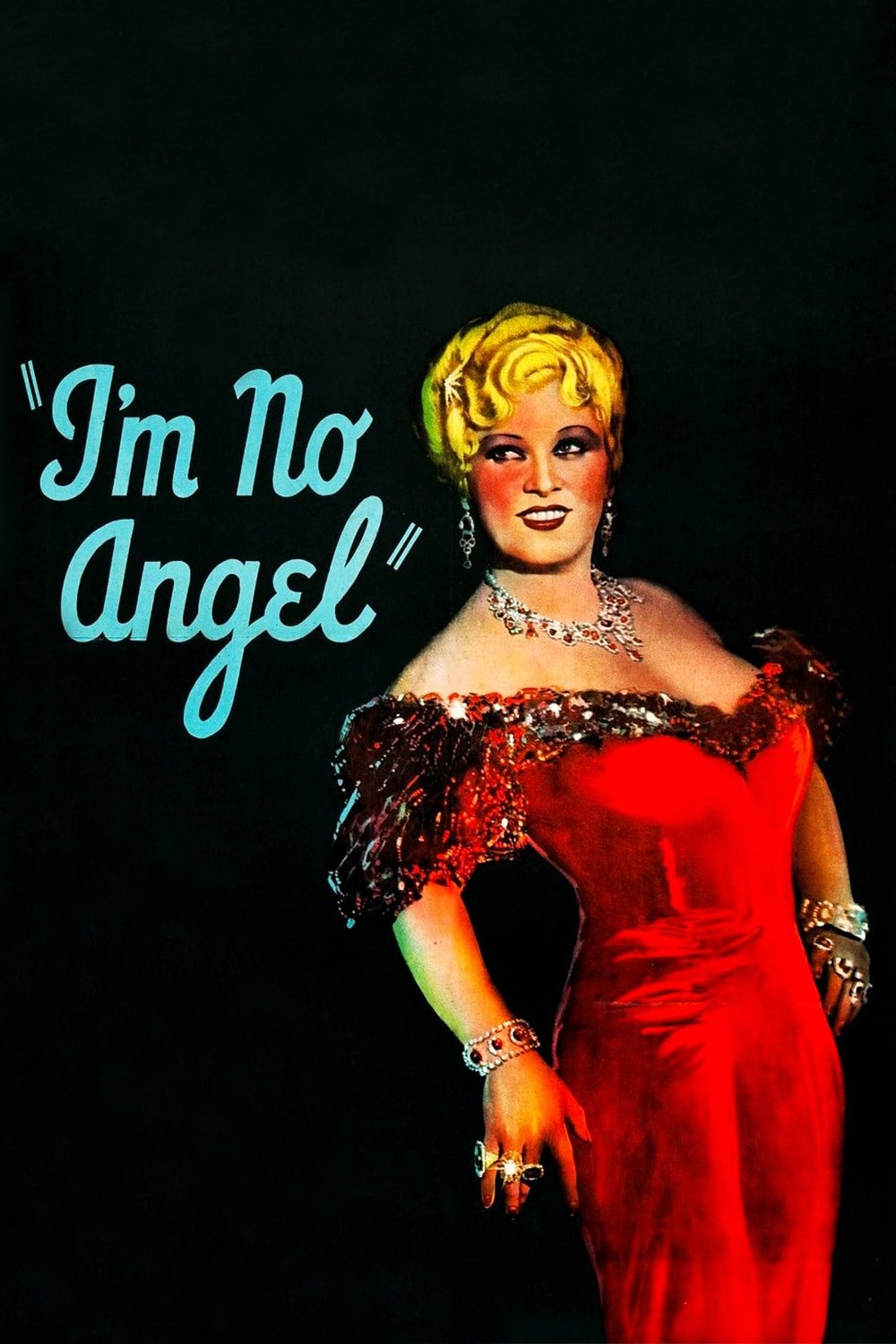
Bold performer Tira works as dancing beauty and lion tamer at a fair. Out of an urgent financial need, she agrees to a risky new number: she'll put her head into the lion's mouth! With this attraction, the circus makes it to New York and Tira can pursue her dearest occupation — flirting with rich men and accepting expensive presents.
Cary Grant plays Jack Clayton, under the direction of Wesley Ruggles, released in 1933.
The Story
I'm No Angel stars Mae West as Tira, a carnival lion tamer and sideshow performer who talks and schemes her way up the social ladder, ultimately setting her sights on wealthy socialite Jack Clayton, played by Cary Grant. When Jack breaks their engagement over false rumors of Tira's infidelity, she sues him for breach of promise and defends herself in a courtroom climax that is as much comic performance as legal drama, before the two are reconciled.
Production Context
Released by Paramount in October 1933, I'm No Angel was written by Mae West herself and directed by Wesley Ruggles, produced at the height of West's box-office power and just before the Production Code Administration began strictly enforcing its restrictions on innuendo-laden dialogue. It was the second and final pairing of West and Grant, following She Done Him Wrong earlier the same year. Both films were instrumental in rescuing Paramount from near-bankruptcy during the Depression, and West specifically requested Grant as her leading man, later crediting herself with discovering him — a claim Grant himself downplayed, though the association undeniably raised his profile.
Why It Mattered Then
I'm No Angel was one of the biggest hits of 1933 and, alongside She Done Him Wrong, helped provoke the moral backlash that led directly to strict enforcement of the Hays Code from 1934 onward. For Grant, playing the comparatively stiff romantic foil to West's dominant comic persona was a valuable lesson in reactive comic timing, teaching him to play straight man to a larger star — a skill he would later redeploy, transformed, in his own screwball comedies.
Why It Matters Today
Today the film is celebrated chiefly as a high point of pre-Code Hollywood audacity and a showcase for Mae West's singular comic voice, but it retains historical importance in the Cary Grant story as the collaboration that first put his name before mass audiences on marquees alongside a major star. Watching Grant here — handsome, slightly wooden, still finding his footing — offers a fascinating contrast with the assured comic mastery he would achieve just a few years later.
Gallery
Full billed cast of I'm No Angel (1933).
Players in billing order, with the characters they play.
- Mae Westas Tira
- Cary Grantas Jack Clayton
- Gregory Ratoffas Benny Pinkowitz
- Edward Arnoldas Big Bill Barton
- Ralf Haroldeas Slick Wiley
- Kent Tayloras Kirk Lawrence
- Gertrude Michaelas Alicia Hatton
- Russell Hoptonas 'Flea' Madigan
- Dorothy Petersonas Thelma
- William B. Davidsonas Ernest Brown
- Gertrude Howardas Beulah Thorndyke
- Libby Tayloras Tira's Maid
- Walter Walkeras Judge (uncredited)
- Irving Pichelas Clayton's Attorney (uncredited)
- Nat Pendletonas Harry (uncredited)
- Hattie McDanielas Manicurist (uncredited)
- Nigel De Brulieras Rajah the Fortune Teller (uncredited)
- Ray Cookeas Sailor at Circus (uncredited)
- Larry Steersas Lawyer at Courtroom Defense Table (uncredited)
- Bobby Barberas Man in Crowd (uncredited)
- Eddie Bordenas Carnival Sideshow Spectator (uncredited)
- George Bruggemanas Omnes (uncredited)
- Morrie Cohanas Barton's Chauffeur (uncredited)
- Monte Collinsas Sailor at Circus (uncredited)
- Nell Craigas Mrs. Bond (uncredited)
- Mahlon Hamiltonas Sideshow Spectator (uncredited)
- Edward Hearnas Court Clerk (uncredited)
- Lew Kellyas Joe - Animal Keeper (uncredited)
- Carl M. Levinessas Courtroom Spectator (uncredited)
- Tom Londonas Sideshow Spectator (uncredited)
- Robert McKenzieas Man at Rooming House (uncredited)
- Edmund Mortimeras Courtroom Spectator (uncredited)
- Dennis O'Keefeas Courtroom Reporter (uncredited)
- Jack Pennickas Carny on Spotlight (uncredited)
- Lee Phelpsas Sideshow Spectator (uncredited)
- Ronald R. Rondellas Courtroom Spectator (uncredited)
- Laura Treadwellas Mrs. Fletcher (uncredited)
- Duke Yorkas Sideshow Spectator (uncredited)
Crew.
- Art DirectionBernard Herzbrun
- Art DirectionHans Dreier
- Costume DesignTravis Banton
- DirectorWesley Ruggles
- Director of PhotographyLeo Tover
- EditorOtho Lovering
- Original Music ComposerRudolph G. Kopp
- Original Music ComposerHeinz Roemheld
- Original Music ComposerHerman Hand
- Original Music ComposerHoward Jackson
- Original Music ComposerJohn Leipold
- ProducerWilliam LeBaron
- ScreenplayMae West
- StoryMae West
Players in common.
Also featuring Edward Arnold.
Also featuring Gertrude Michael.
Also featuring Edward Arnold.
Also featuring Russell Hopton.
A quiet dispatch,
once a month.
One considered essay in your inbox each month. No promotions, no algorithms, no forwarding. Unsubscribe with a single click.
Other studies.
Cary Grant and Deborah Kerr headline an elegant romantic comedy exploring whether the perfect partner exists—or whether perfection itself is an illusion.
A thoughtful wartime satire blending romance, comedy, and commentary on celebrity culture.
Cary Grant and Audrey Hepburn create one of cinema's most elegant romantic mysteries—a thrilling game of deception, danger, and unexpected love.