The Last Outpost
A soldier caught between duty and love finds his fate entangled across two remote wartime outposts.
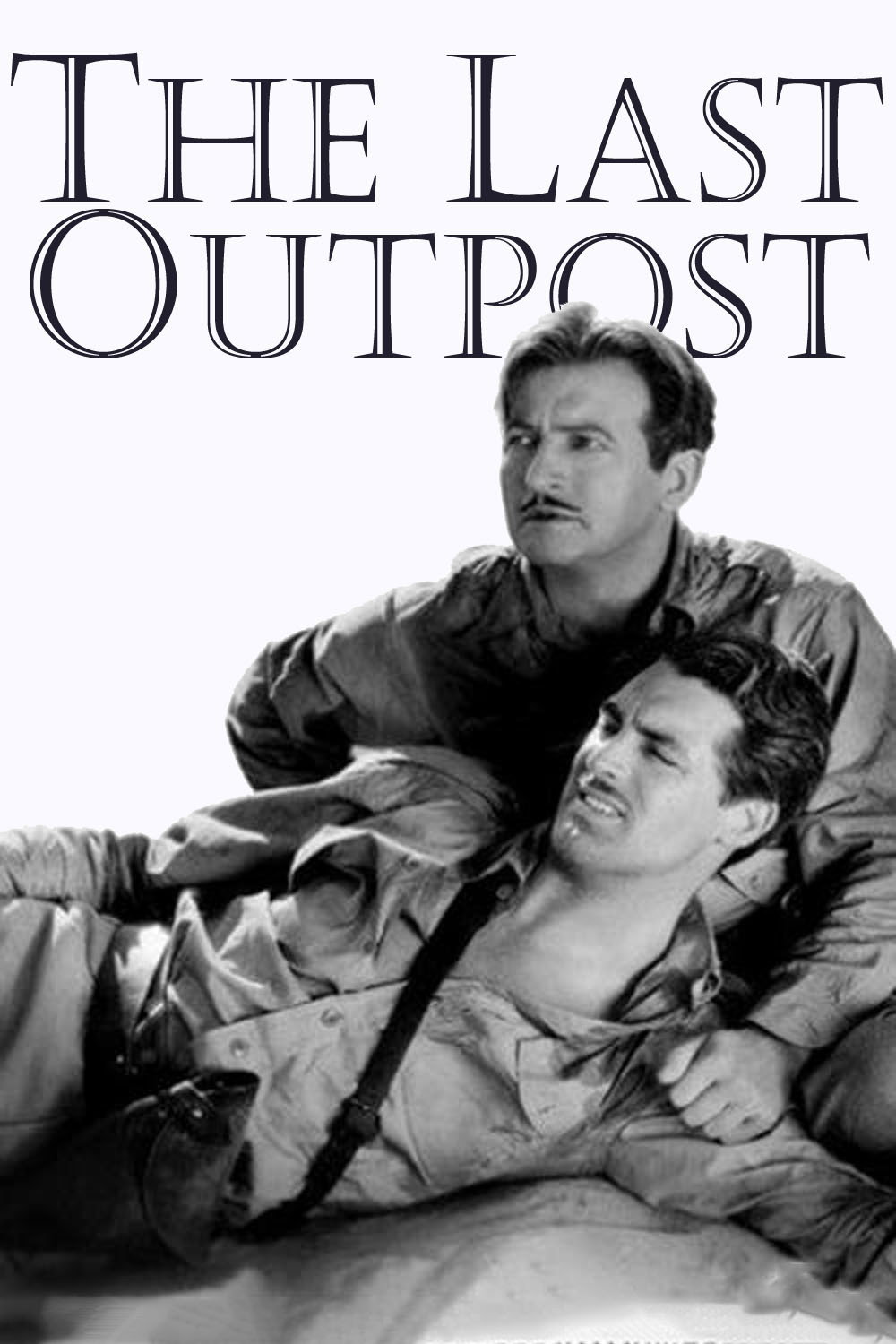
During WW1, the destinies of British officers Michael Andrews and John Stevenson seem intertwined on the battle front as much as on a more personal level.
Cary Grant plays Michael Andrews, under the direction of Charles Barton and Louis J. Gasnier, released in 1935.
The Story
Set against a backdrop of British colonial conflict in the Middle East, The Last Outpost follows Michael Andrews (Cary Grant), a British intelligence officer, and John Stevenson (Claude Rains), an army officer, who both fall in love with the same woman, Rosemary Haydon (Gertrude Michael). Andrews saves Stevenson's life during a tribal uprising, complicating the romantic triangle, before the film resolves with a sacrifice that allows the surviving pair to be together.
Production Context
Released by Paramount in October 1935 and credited to directors Charles Barton and Louis J. Gasnier, The Last Outpost was based on F. Britten Austin's novel The Drum and scripted by Philip MacDonald, Frank Partos and Charles Brackett. It paired Grant with Claude Rains, then a rising dramatic actor fresh from The Invisible Man, in an adventure picture typical of the desert-and-empire genre popular in the mid-1930s, complete with stock footage of tribal warfare blended with studio-shot drama.
Why It Mattered Then
For Paramount, The Last Outpost was a modestly budgeted programmer capitalizing on the vogue for colonial adventure films. For Grant, still working through a run of similar assignments before Sylvia Scarlett and his eventual move into comedy, it offered another opportunity to play a square-jawed leading man in an exotic setting, continuing the studio's uncertain experimentation with his screen image.
Why It Matters Today
The Last Outpost is rarely revived today except by dedicated Grant completists and classic-adventure enthusiasts, but it remains a useful data point in tracing his development: a competent, unremarkable performance in a competent, unremarkable picture, made in the final stretch before Grant's career pivoted decisively toward the comic sophistication that would define his legacy.
Gallery
Full billed cast of The Last Outpost (1935).
Players in billing order, with the characters they play.
- Cary Grantas Michael Andrews
- Gertrude Michaelas Rosemary Haydon
- Claude Rainsas John Stevenson
- Margaret Swopeas Nurse Rowland
- Jameson Thomasas Cullen
- Nick Shaidas Haidar
- Kathleen Burkeas Ilya
- Colin Tapleyas Lieutenant Prescott
- Billy Bevanas Private Foster
- Claude Kingas General
- Frazer Acostaas Armenian officer (uncredited)
- Robert Adairas Sergeant in general's office (uncredited)
- Malay Cluas Armenian guard (uncredited)
- Elspeth Dudgeonas Head Nurse (uncredited)
- Mark Strongas Officer (uncredited)
Crew.
- Art DirectionA. Earl Hedrick
- Art DirectionHans Dreier
- DirectorCharles Barton
- DirectorLouis J. Gasnier
- Director of PhotographyTheodor Sparkuhl
- EditorJack Dennis
- Original Music ComposerWilliam E. Lynch
- Original Music ComposerBernhard Kaun
- Original Music ComposerHeinz Roemheld
- Original Music ComposerMilan Roder
- ProducerE. Lloyd Sheldon
- ScreenplayPhilip MacDonald
- StoryF. Britten Austin
A quiet dispatch,
once a month.
One considered essay in your inbox each month. No promotions, no algorithms, no forwarding. Unsubscribe with a single click.
Other studies.
Cary Grant and Deborah Kerr headline an elegant romantic comedy exploring whether the perfect partner exists—or whether perfection itself is an illusion.
A thoughtful wartime satire blending romance, comedy, and commentary on celebrity culture.
Cary Grant and Audrey Hepburn create one of cinema's most elegant romantic mysteries—a thrilling game of deception, danger, and unexpected love.