Notorious
A masterclass in suspense, romance and sacrifice from Alfred Hitchcock, featuring one of Cary Grant's finest dramatic performances.

Editorial ratings
- Cary Grant
- Story
- Direction
- Cinematography
- Entertainment
- Historical importance
In order to help bring Nazis to justice, U.S. government agent T.R. Devlin recruits Alicia Huberman, the American daughter of a convicted German war criminal, as a spy. As they begin to fall for one another, Alicia is instructed to win the affections of Alexander Sebastian, a Nazi hiding out in Brazil. When Sebastian becomes serious about his relationship with Alicia, the stakes get higher, and Devlin must watch her slip further undercover.
Cary Grant plays Devlin, under the direction of Alfred Hitchcock, released in 1946.
Featured quote
“She's a woman. I know women — after they've given, they hate you for it.”
T. R. Devlin (Cary Grant), Notorious, 1946
Introduction
Released in the summer of 1946, Notorious arrived as Hollywood was still reckoning with the aftermath of the Second World War. Alfred Hitchcock, working from a lean, morally charged screenplay by Ben Hecht, fused espionage, romance and guilt into a film unlike anything else in his American period — and Cary Grant, in one of the great performances of his career, made himself the still, watchful center of it.
What Happened
United States government agent T. R. Devlin recruits Alicia Huberman, the daughter of a convicted Nazi spy, to infiltrate a group of German conspirators operating out of Rio de Janeiro. To secure her cover she marries their leader, Alexander Sebastian, while Devlin — the man she loves — watches from the outside.
As Alicia burrows deeper into Sebastian's household, she discovers evidence of a secret uranium operation. Her cover holds until Sebastian and his controlling mother realize what she is. In the film's final movement, Devlin walks into the house and, with almost unbearable restraint, carries her out.
Why It Was Important Then
In 1946, the idea of former Nazi networks regrouping in South America was neither fantasy nor abstraction; it was reported in the American press. Notorious gave those anxieties a shape audiences could feel.
Just as importantly, it proved that a spy story could be driven by emotional consequence — jealousy, trust, sacrifice — rather than by action. Hitchcock's visual grammar and Hecht's discipline as a writer elevated the genre from serial adventure to serious drama.
The Cary Grant Standard
Grant does something in Notorious that only a mature star can risk: he holds back. Devlin is a man who has decided, before the picture begins, that professionalism is safer than feeling. Every glance, every long silence, every clipped line of dialogue is calibrated against a love he refuses to declare.
The result is one of the most emotionally exact performances of Grant's career — proof that the man who could carry a screwball comedy on charm alone could also carry a Hitchcock thriller on discipline.
Why It Still Matters Today
Modern espionage cinema — from le Carré adaptations to prestige spy television — continues to borrow the language of Notorious: divided loyalties, romance as tradecraft, the private cost of public duty. The film's themes of trust and manipulation feel neither dated nor decorative.
For contemporary audiences, it also stands as a masterclass in restraint at a moment when so much filmmaking has grown louder.
Significance & Legacy
Selected for preservation in the United States National Film Registry, Notorious is routinely ranked among Hitchcock's greatest films and among the finest American thrillers of the studio era. Its long crane shot down to the key in Alicia's hand remains one of the most-studied sequences in cinema.
For the archive of Cary Grant, it is essential: the picture where his lightness turned, without warning, into gravity.
Gallery
Collaborators.
Alfred Hitchcock was born in Leytonstone, east London, in 1899, the son of a greengrocer, and entered the film industry in 1919 designing title cards before directing his first film, The Pleasure Garden, in 1925. By the early 1930s he was already known in Britain as the "master of suspense" for films such as The Man Who Knew Too Much and The 39 Steps, and in 1939 producer David O. Selznick brought him to Hollywood, where Rebecca (1940) won the Academy Award for Best Picture in his first American year. Over the following four decades Hitchcock built the most recognisable directorial identity in commercial cinema: the audience implicated in guilt and voyeurism, the ordinary man wrongly accused, the blonde heroine in danger, and a visual grammar of subjective camera and precise editing that he called "pure cinema." He was equally shrewd about his own image, hosting Alfred Hitchcock Presents on television from 1955 and cultivating the silhouette and deadpan persona that made him one of the few directors as famous as his stars. His four films with Cary Grant, spread across eighteen years, form one of the most studied actor-director partnerships in film history. Hitchcock used Grant's established charm as raw material to be complicated and, at times, weaponised — casting him as a possible wife-murderer in Suspicion, a compromised government agent in Notorious, a reformed jewel thief in To Catch a Thief, and an innocent man mistaken for a spy in North by Northwest. Each film asked audiences to hold their trust in Grant's likability against genuine suspicion of his character, a tension only Hitchcock exploited so directly. Hitchcock received an Academy Honorary Award in 1968 and was knighted shortly before his death in 1980, closing a career that had produced more influential and imitated films than perhaps any director's in the history of the medium.
Ingrid Bergman began her acting career in Sweden in the 1930s before Hollywood producer David O. Selznick brought her to the United States in 1939 to remake her Swedish hit "Intermezzo." She became one of the era's most acclaimed leading women, working in English, Swedish, and Italian across a career spanning more than five decades, and won three competitive Academy Awards, a rare feat matched by few actors of any era. Her international stardom was interrupted in the late 1940s by a public scandal when she left her husband for the Italian director Roberto Rossellini while still married, a relationship condemned on the floor of the United States Senate; she worked mainly in Europe with Rossellini through the following years before an American comeback sealed by her second Best Actress Oscar for "Anastasia" (1956). Bergman starred opposite Cary Grant twice for Alfred Hitchcock, in "Notorious" (1946), a wartime espionage thriller opposite Grant and Claude Rains, and again in the lighter romantic comedy "Indiscreet" (1958), after both her exile and comeback. She continued working until shortly before her death in 1982, winning her third Academy Award, for Best Supporting Actress, for "Murder on the Orient Express" (1974).
William Claude Rains was born in London on 10 November 1889, the son of stage actor Frederick Rains. He grew up with a pronounced cockney accent and, according to biographical accounts, a stammer, both of which he worked to eliminate through years of voice training as he built a stage career in London beginning in the early 1900s, eventually working under and studying alongside figures at His Majesty's Theatre. He served in the London Scottish Regiment during the First World War and was gassed, which left a lasting effect on his voice — one that, combined with his training, produced the distinctive, cultivated diction for which he later became known. Rains built a substantial British and Broadway stage career through the 1920s before Hollywood took note of him relatively late, at age forty-three, and cast him — sight unseen by cinema audiences for most of the film — as the title character in The Invisible Man (1933), whose face remains hidden until the closing scene. The film established him in American pictures, and he became one of the era's most sought character actors, equally convincing as villains, corrupt officials and men of hidden decency. His most enduring roles came across the 1930s and 1940s: the crooked senator opposite James Stewart in Mr. Smith Goes to Washington (1939), and the morally ambiguous Vichy police chief Captain Renault in Casablanca (1942), whose closing line about "the usual suspects" became one of cinema's most quoted. He received four Academy Award nominations for Best Supporting Actor across his career and never won. He continued working into the 1960s, including a role in Lawrence of Arabia (1962). Rains died in Laconia, New Hampshire, on 30 May 1967, at seventy-seven.
Cast.
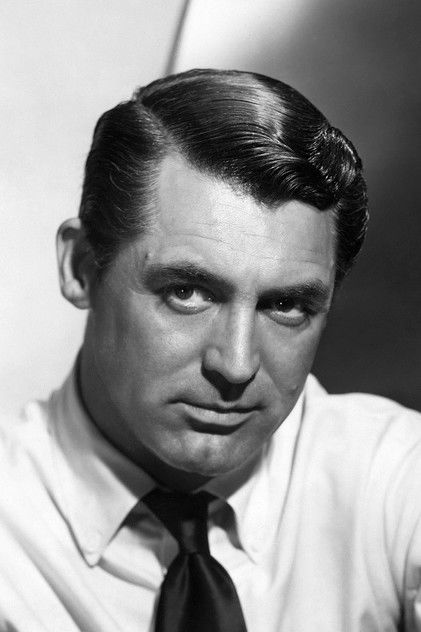
Cary Grant as Devlin
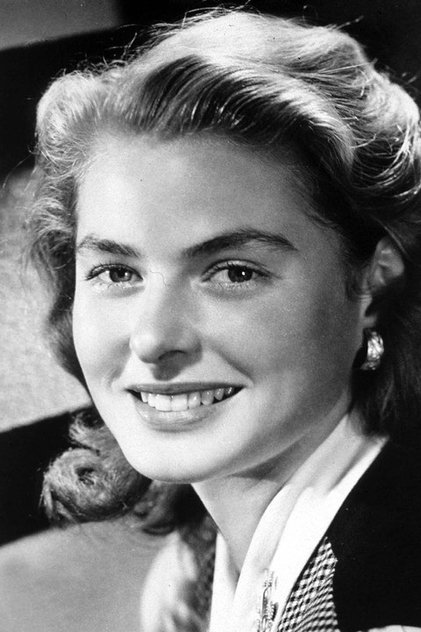
Ingrid Bergman as Alicia Huberman
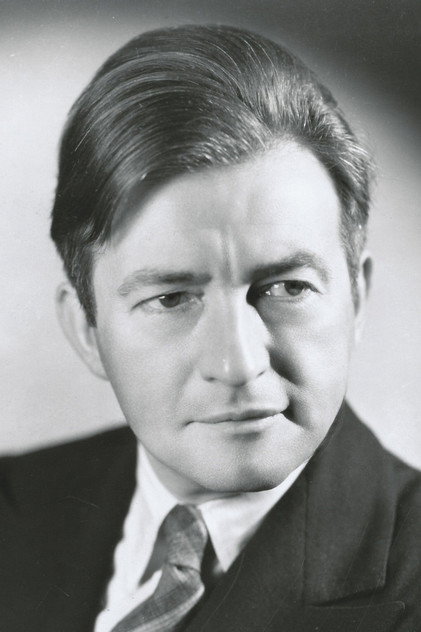
Claude Rains as Alexander Sebastian
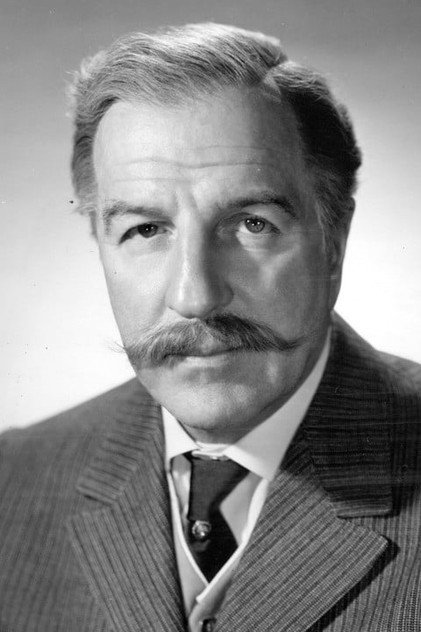
Louis Calhern as Paul Prescott
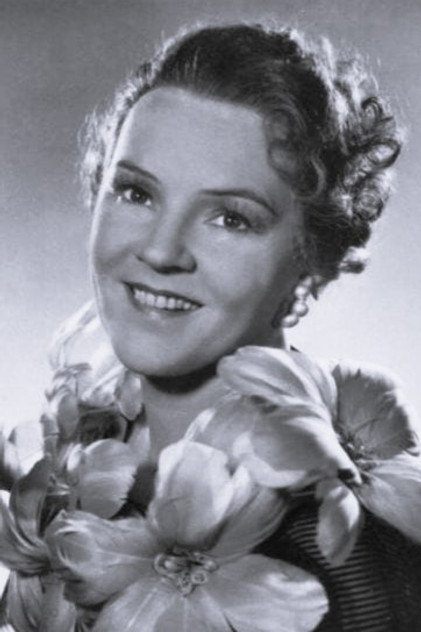
Leopoldine Konstantin as Madame Sebastian
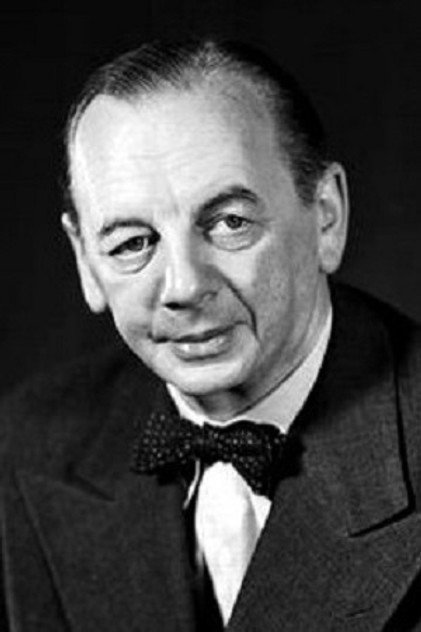
Reinhold Schünzel as Dr. Anderson
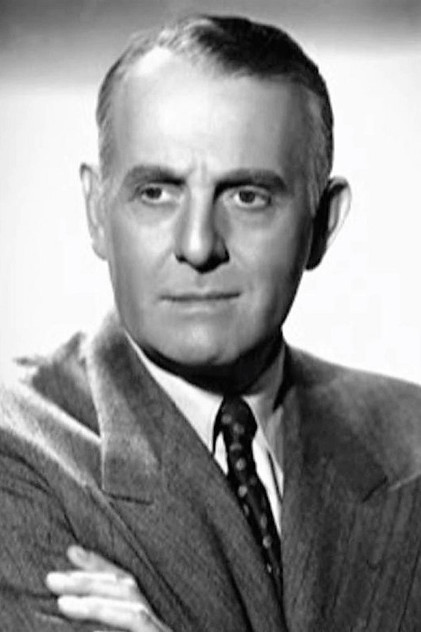
Moroni Olsen as Walter Beardsley
Full billed cast of Notorious (1946).
Players in billing order, with the characters they play.
- Cary Grantas Devlin
- Ingrid Bergmanas Alicia Huberman
- Claude Rainsas Alexander Sebastian
- Louis Calhernas Paul Prescott
- Leopoldine Konstantinas Madame Sebastian
- Reinhold Schünzelas Dr. Anderson
- Moroni Olsenas Walter Beardsley
- Ivan Triesaultas Eric Mathis
- Alex Minotisas Joseph
- Wally Brownas Mr. Hopkins
- Charles Mendlas Commodore
- Ricardo Costaas Dr. Barbosa
- Eberhard Krumschmidtas Hupka
- Fay Bakeras Ethel
- Friedrich von Ledeburas Knerr (uncredited)
- Peter von Zerneckas Wilhelm Rossner (uncredited)
- Fred Nurneyas John Huberman (uncredited)
- Charles D. Brownas Judge (uncredited)
- Eddie Bruceas Reporter (uncredited)
- Ben Erwayas Reporter (uncredited)
- Donald Kerras Reporter (uncredited)
- James Loganas Reporter (uncredited)
- Emmett Voganas Reporter (uncredited)
- John Vosperas Reporter (uncredited)
- Alan Wardas Reporter (uncredited)
- Paul Bryaras Photographer (uncredited)
- George Lynnas Photographer (uncredited)
- Frank Marloweas Photographer (uncredited)
- Howard Negleyas Photographer (uncredited)
- Virginia Greggas File Clerk (uncredited)
- Bea Benaderetas File Clerk (uncredited)
- Aileen Carlyleas Woman at Party (uncredited)
- Elizabeth Wilsonas Woman at Party (uncredited)
- Almeda Fowleras Woman (uncredited)
- Leota Lorraineas Woman (uncredited)
- Sandra Morganas Woman (uncredited)
- Lillian Westas Woman (uncredited)
- Richard Clarkeas Man (uncredited)
- Francis McDonaldas Man (uncredited)
- Alfred Hitchcockas Man Drinking Champagne at Party (uncredited)
Crew.
- Art DirectionCarroll Clark
- Art DirectionAlbert S. D'Agostino
- Costume DesignEdith Head
- DirectorAlfred Hitchcock
- Director of PhotographyTed Tetzlaff
- EditorTheron Warth
- Original Music ComposerRoy Webb
- ProducerAlfred Hitchcock
- StoryJohn Taintor Foote
- WriterBen Hecht
Quotations from Notorious
The Quotebook →“This is a very strange love affair.”
Cary Grant as T. R. Devlin · 1946VerifiedSpoken as T. R. Devlin in Notorious (1946).
“Dry your eyes, baby; it’s out of character.”
Cary Grant as T. R. Devlin · 1946VerifiedSpoken as T. R. Devlin in Notorious (1946).
“Miss Huberman is first, last, and always not a lady. She may be risking her life, but when it comes to being a lady, she doesn’t hold a candle to your wife.”
Cary Grant as T. R. Devlin · 1946VerifiedSpoken as T. R. Devlin in Notorious (1946).
A quiet dispatch,
once a month.
One considered essay in your inbox each month. No promotions, no algorithms, no forwarding. Unsubscribe with a single click.
Other studies.
Cary Grant and Deborah Kerr headline an elegant romantic comedy exploring whether the perfect partner exists—or whether perfection itself is an illusion.
A thoughtful wartime satire blending romance, comedy, and commentary on celebrity culture.
Cary Grant and Audrey Hepburn create one of cinema's most elegant romantic mysteries—a thrilling game of deception, danger, and unexpected love.