Room for One More
A married couple's decision to foster children born into hardship transforms their family.
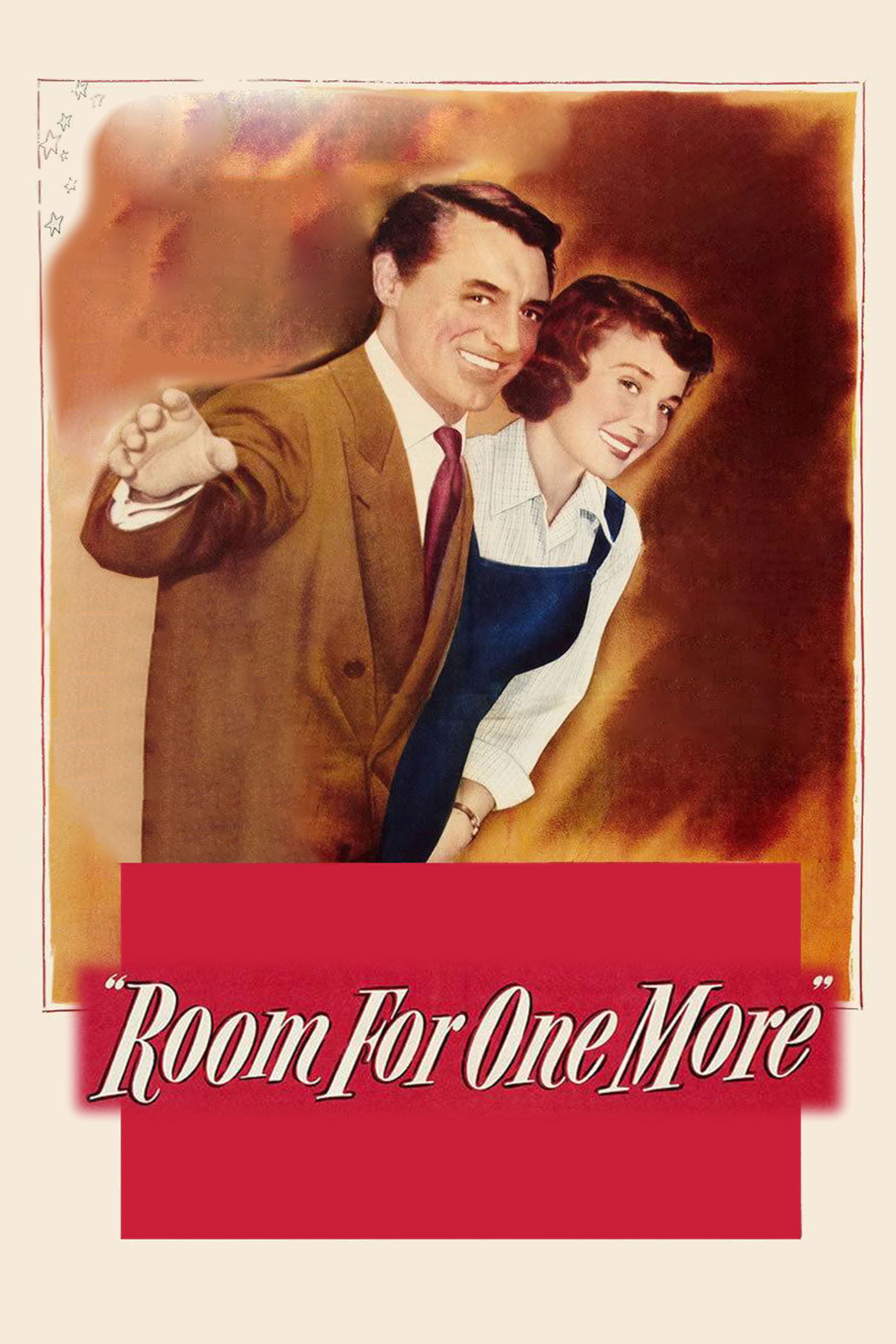
Anne and "Poppy" Rose have three quirky kids. Anne has a generous heart and the belief in the innocence of children. To the unhappy surprise of her husband she takes in the orphan Jane, a problem child who already tried to kill herself once.
Cary Grant plays George "Poppy" Rose, under the direction of Norman Taurog, released in 1952.
The Story
Cary Grant plays George "Poppy" Rose, a New Jersey engineer whose wife, Anna, decides — over his initial reluctance — to take in foster children alongside their own three. First comes Jane, an unhappy thirteen-year-old whose resentment gradually softens into attachment; then Jimmy-John, a wary twelve-year-old with leg braces who arrives unable to read, prone to violent outbursts, and convinced no one wants him. Poppy, more skeptical than his wife at the outset, becomes the story's emotional center as he coaxes both children toward trust, ultimately deciding on his own initiative that Jane and Jimmy-John should stay for good rather than return to the orphanage.
The film follows the family through the ordinary crises of childhood reframed as acts of quiet heroism: a school dance where Poppy intervenes to make sure Jane isn't humiliated, a Boy Scout troop that gives Jimmy-John his first taste of accomplishment, and his eventual achievement of Eagle Scout rank. Grant, narrating intermittently as Poppy, plays the role with a warmth and restraint far removed from his screwball or thriller work, anchoring a story that trades incident for accumulated sentiment.
Production Context
Released by Warner Bros. on January 26, 1952, Room for One More was directed by Norman Taurog and produced by Henry Blanke from a screenplay by Jack Rose and Melville Shavelson, adapted from Anna Perrott Rose's 1950 autobiography of the same name. It paired Cary Grant with his second wife, Betsy Drake, in their only other film together after Every Girl Should Be Married three years earlier, giving the production an added layer of real-life domestic resonance that studio publicity leaned on heavily. Shot in black and white on a modest budget of roughly $1.1 million, the film relied on unforced, low-key staging rather than spectacle, with Robert Burks — soon to become Alfred Hitchcock's regular cinematographer — shooting the family scenes with a plain, unglamorous naturalism suited to the material.
The picture arrived at a moment when Grant, in his late forties, was consciously diversifying away from the sophisticated bachelor and screwball roles that had defined his 1930s and 1940s work, taking on a married, paternal character grounded in domestic responsibility rather than romantic pursuit. It performed solidly, grossing $2.75 million domestically, and a decade later inspired a short-lived television sitcom of the same title.
Why It Mattered Then
In 1952, Room for One More offered audiences a gentler counterpoint to the war and crime pictures dominating the era, and it gave Grant a rare opportunity to play an ordinary, married suburban father rather than a debonair adventurer. Reviewers and audiences responded warmly to the sentimental but unsentimentalized treatment of foster care, and to the visible chemistry between Grant and Drake, whose off-screen marriage lent the film's depiction of domestic partnership a note of authenticity that contemporary audiences found appealing. It reinforced Grant's ability to hold an audience in material entirely without intrigue, disguise or physical comedy, relying instead on warmth and comic understatement.
Why It Matters Today
Room for One More is remembered today chiefly as a modest but sincere family drama and as one of only two films to pair Grant with Betsy Drake, offering a rare on-screen record of their real marriage. For historians of Grant's career, it is valuable evidence of his range beyond the urbane comic and thriller personas for which he is best remembered, showing an actor willing to underplay in service of a small, earnest story about parenthood and belonging. It remains a footnote rather than a landmark in the broader history of American cinema, but a telling one: proof that even at the height of his stardom, Grant continued to seek roles that tested different registers of his screen identity.
Gallery
Full billed cast of Room for One More (1952).
Players in billing order, with the characters they play.
- Cary Grantas George "Poppy" Rose
- Betsy Drakeas Anna Perrott Rose
- Lurene Tuttleas Miss Kenyon
- Randy Stuartas Mrs. Gladys Foreman
- John Ridgelyas Harry Foreman
- Irving Baconas Mayor Michael J. Kane
- Mary Treenas Grace Roberts (as Mary Lou Treen)
- Iris Mannas Jane Miller
- George Winslowas Teenie Rose
- Clifford Tatum Jr.as Jimmy John Wilson
- Gay Gordonas Trot
- Malcolm Cassellas Tim Rose
- Larry Olsenas Benji Roberts
- Don Beddoeas Mr. Taylor (uncredited)
- Oliver Blakeas Mr. Tatum (uncredited)
- Lillian Bronsonas Teacher (uncredited)
- Frank Fergusonas Steve (uncredited)
- Dabbs Greeras Scoutmaster (uncredited)
- Barry Nortonas Boy Scout Ceremony Attendee (uncredited)
- Tony Tayloras Joey (uncredited)
- Charles Wattsas Mr. Roberts
- Charles Meredithas Mr. S. Thatcher
- John Alban
- Mary Bayless
- John Breen
- James Conaty
- Charles Ferguson
- Elizabeth Flournoy
- Herschel Grahamas Boy Scout Ceremony Attendee (uncredited)
- Marion Gray
- Robert Haines
- Karen Hale
- Gretchen Hartman
- Marcoreta Hellman
- Fred Kelsey
- Doris Kemper
- Dorothy Kennedy
- Walt La Rue
- King Lockwood
- Mary Newton
Crew.
- Art DirectionDouglas Bacon
- Costume DesignLeah Rhodes
- Costume DesignMarjorie Best
- DirectorNorman Taurog
- Director of PhotographyRobert Burks
- EditorAlan Crosland, Jr.
- Original Music ComposerMax Steiner
- ProducerHenry Blanke
- ScreenplayJack Rose
- ScreenplayMelville Shavelson
Players in common.
A quiet dispatch,
once a month.
One considered essay in your inbox each month. No promotions, no algorithms, no forwarding. Unsubscribe with a single click.
Other studies.
Cary Grant and Deborah Kerr headline an elegant romantic comedy exploring whether the perfect partner exists—or whether perfection itself is an illusion.
A thoughtful wartime satire blending romance, comedy, and commentary on celebrity culture.
Cary Grant and Audrey Hepburn create one of cinema's most elegant romantic mysteries—a thrilling game of deception, danger, and unexpected love.