Bringing Up Baby
A fussy paleontologist's life is upended by a scatterbrained heiress and her pet leopard.
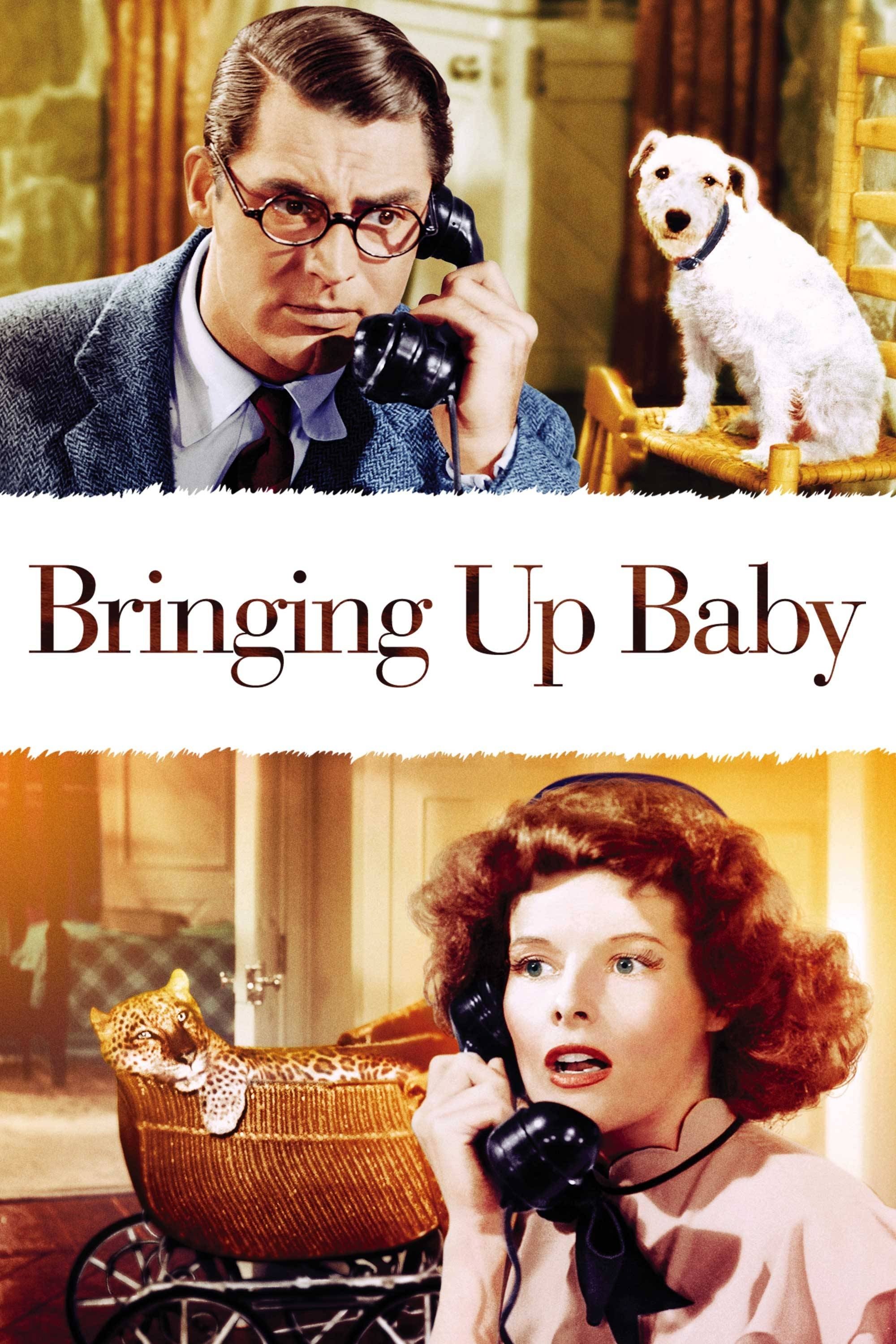
David Huxley is waiting to get a bone he needs for his museum collection. Through a series of strange circumstances, he meets Susan Vance, and the duo have a series of misadventures which include a leopard called Baby.
Cary Grant plays David, under the direction of Howard Hawks, released in 1938.
Featured quote
“Because I just went GAY all of a sudden!”
Cary Grant as David Huxley — Huxley, caught in a marabou-trimmed negligee, explains himself. The line is widely cited as one of the first uses of the word in its modern sense in an American film.
The Story
Dr. David Huxley (Cary Grant) is a mild, bespectacled paleontologist one day away from both his wedding and the completion of a brontosaurus skeleton he has spent four years assembling. He needs a million-dollar donation from a wealthy benefactor to finish the work. On the golf course where he intends to charm her lawyer, he meets Susan Vance (Katharine Hepburn), a scatterbrained heiress who plays his ball, drives off in his car, and proceeds, with complete goodwill, to dismantle his life.
Susan acquires a tame leopard named Baby, sent to her from Brazil, and enlists David in delivering it to her aunt's Connecticut farm. The aunt turns out to be the benefactor. Over one long night the pair lose the leopard, lose the last bone of the brontosaurus to a dog, are arrested by a small-town constable, and are pursued by a genuinely dangerous circus leopard mistaken for Baby. David's engagement, dignity, and eyeglasses do not survive the weekend. His skeleton does not survive the final scene.
Production Context
Directed by Howard Hawks for RKO Radio Pictures and released in February 1938, Bringing Up Baby was written by Dudley Nichols and Hagar Wilde, based on Wilde's short story. Hawks, working with Hepburn for the first time, reportedly coached her toward a looser, more instinctive comic style, and Grant drew on his vaudeville and acrobatic background, including a nod to his idol Harold Lloyd, to shape David's fussy, bespectacled physical comedy. The production was notoriously overbudget and overschedule, contributing to a box-office disappointment on first release, and it followed Grant's similarly structured work in Topper and The Awful Truth the previous year, cementing his shift into screwball comedy.
Why It Mattered Then
On its February 1938 release, Bringing Up Baby was, by most contemporary accounts, a disappointment. It arrived forty days behind schedule and roughly $330,000 over its original budget, and despite strong preview scores it failed to recoup its cost on first run, contributing to the Independent Theatre Owners of America's notorious labeling of Katharine Hepburn as "box office poison." For Grant, however, the film consolidated a shift already underway with The Awful Truth the previous year: from leading man in dramas and star vehicles built around others to a comic performer capable of carrying farce through sustained physical and verbal invention. His round Harold Lloyd-style glasses, his controlled hysteria opposite Hepburn's heiress, and his willingness to be humiliated, chased and outwitted for two hours established a template — the graceful man undone by chaos he cannot control — that would recur throughout his subsequent comic work.
Why It Matters Today
Bringing Up Baby's reputation reversed dramatically after its release, rebuilding through television broadcasts in the 1950s until it came to be regarded as one of the defining achievements of American screwball comedy. Selected for the National Film Registry in 1990 and a fixture of the American Film Institute's 100 Years...100 Movies list, it is now studied as a nearly perfect demonstration of the genre's mechanics: escalating misunderstanding, a leopard loose in Connecticut, a torn dress, a collapsing dinosaur skeleton, all sustained by the friction between Grant's fussy paleontologist and Hepburn's oblivious heiress. Modern critics and historians treat the pairing of Grant and Hepburn here as one of the emblematic partnerships of the studio era, and Grant's performance as David Huxley remains a touchstone for the "reactive" comic hero, a man whose stability is the joke precisely because the world refuses to let him keep it.
Gallery
Full billed cast of Bringing Up Baby (1938).
Players in billing order, with the characters they play.
- Katharine Hepburnas Susan
- Cary Grantas David
- Charles Rugglesas Major Applegate
- Walter Catlettas Slocum
- Barry Fitzgeraldas Mr. Gogarty
- May Robsonas Aunt Elizabeth
- Fritz Feldas Dr. Lehman
- Leona Robertsas Mrs. Gogarty
- George Irvingas Mr. Peabody
- Tala Birellas Mrs. Lehman
- Virginia Walkeras Alice Swallow
- John Kellyas Elmer
- William Benedictas David's Caddy (uncredited)
- Billy Bevanas Joe (uncredited)
- Ward Bondas Motorcycle Cop (uncredited)
- Jack Carsonas Circus Roustabout (uncredited)
- Judith Fordas Hatcheck Girl (uncredited)
- Edward Garganas Zoo Official (uncredited)
- Paul Guilfoyleas (uncredited)
- Karl 'Karchy' Kosiczkyas Midget (uncredited)
- Skippyas George (uncredited)
- Jack Gardneras Delivery Man (uncredited)
- Herschel Grahamas Waiter (uncredited)
Crew.
- Art DirectionVan Nest Polglase
- Costume DesignHoward Greer
- DirectorHoward Hawks
- Director of PhotographyRussell Metty
- EditorGeorge Hively
- Original Music ComposerRoy Webb
- ProducerHoward Hawks
- ScreenplayDudley Nichols
- ScreenplayHagar Wilde
- StoryHagar Wilde
Players in common.
Quotations from Bringing Up Baby
The Quotebook →“You mean nothing must interfere with your work? Our marriage must entail no domestic entanglements of any kind.”
Cary Grant as David Huxley · 1938VerifiedSpoken as David Huxley in Bringing Up Baby (1938).
“When a man is wrestling a leopard in the middle of a pond, he’s in no position to run.”
Cary Grant as David Huxley · 1938VerifiedSpoken as David Huxley in Bringing Up Baby (1938).
A quiet dispatch,
once a month.
One considered essay in your inbox each month. No promotions, no algorithms, no forwarding. Unsubscribe with a single click.
Other studies.
Cary Grant and Deborah Kerr headline an elegant romantic comedy exploring whether the perfect partner exists—or whether perfection itself is an illusion.
A thoughtful wartime satire blending romance, comedy, and commentary on celebrity culture.
Cary Grant and Audrey Hepburn create one of cinema's most elegant romantic mysteries—a thrilling game of deception, danger, and unexpected love.