Once Upon a Time
A struggling Broadway producer's fortunes turn on a boy's caterpillar that dances on command.
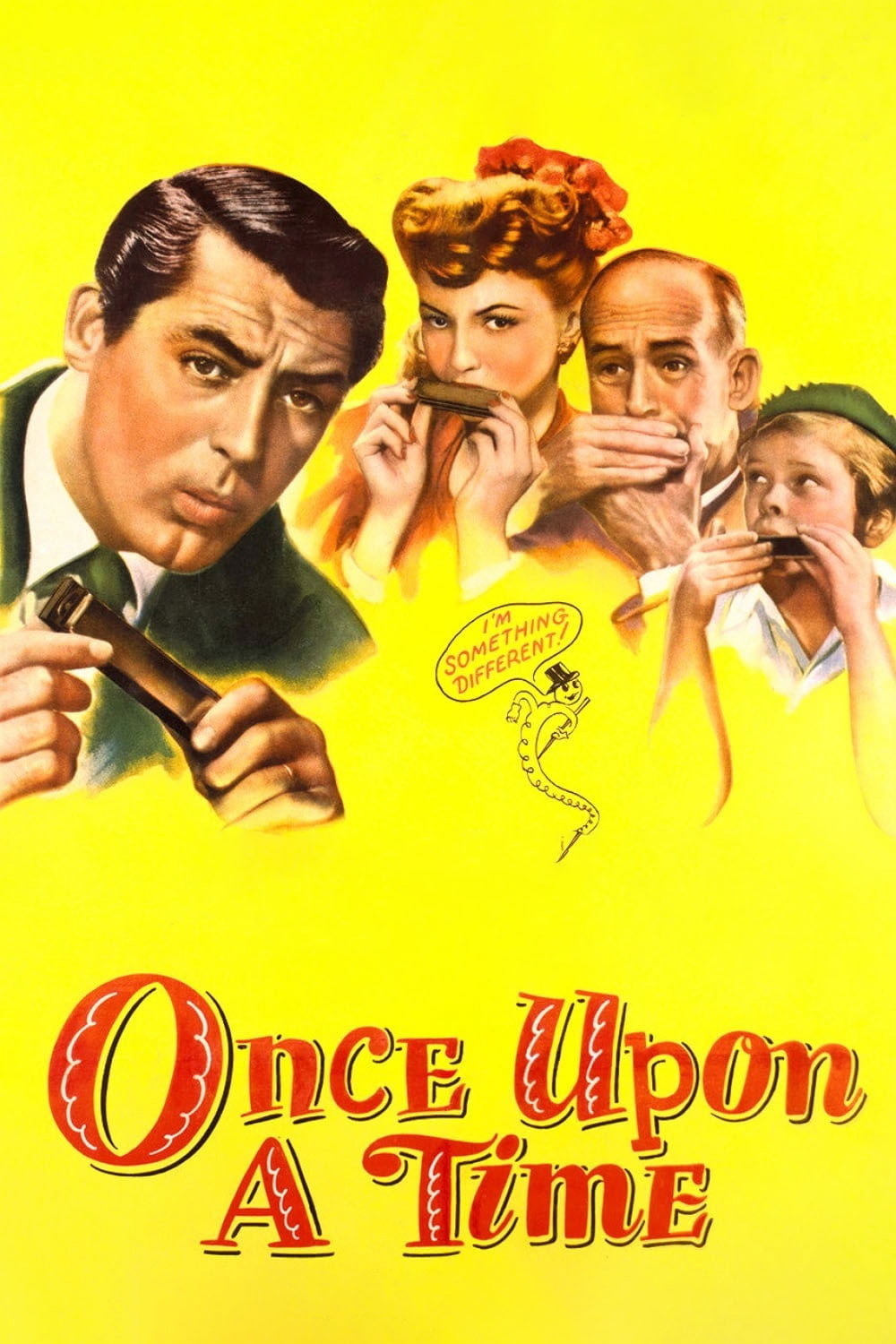
Broadway producer Jerry Flynn is anxious to recapture the magic and reclaim the crowds after a set of costly flops. Outside his theater one night, Flynn meets a young boy who just might save the day. Inside a small box the boy shows Flynn his pride and joy: a caterpillar named Curly that dances to Yes Sir, That's My Baby. Word quickly spreads about the amazingly talented hoofer, and the caterpillar becomes a symbol of hope for wartime America. Soon, offers are pouring in to capitalize on this sensational insect.
Cary Grant plays Jerry Flynn, under the direction of Alexander Hall, released in 1944.
The Story
Cary Grant plays Jerry Flynn, a financially desperate Broadway producer who discovers that a local boy, Pinky (Ted Donaldson), owns an extraordinary attraction: a caterpillar in a box that dances whenever Pinky whistles the tune Yes Sir, Thats My Baby. Flynn schemes to exploit the act to save his failing theater, only to grow attached to the boy and to confront his own conscience when the caterpillar disappears into its cocoon at the worst possible moment, threatening to become a butterfly instead of a marketable curiosity.
Production Context
Released by Columbia Pictures on June 29, 1944, and directed by Alexander Hall, Once Upon a Time was adapted from Norman Corwin's 1940 radio play "My Client Curley," itself drawn from a magazine story by Lucille Fletcher, with a screenplay credited to Lewis Meltzer and Oscar Saul. The production carried several working titles during development, including Curly, My Friend Curly and Yes Sir, That's My Baby, before settling on its final, more sentimental title. Louis F. Edelman produced, Franz Planer photographed the film, and Frederick Hollander composed the score; Grant's co-stars included Janet Blair as the boy's showgirl sister and James Gleason as Flynn's put-upon assistant, "the Moke."
The film came at an unusual moment in Grant's career, sandwiched between the darker Hitchcock thriller Suspicion and his Academy Award-nominated dramatic turn in None but the Lonely Heart the same year, and represented a rare venture into outright whimsy — a story built entirely around a dancing caterpillar that both charms and humiliates Grant's fast-talking, morally compromised showman.
Why It Mattered Then
Reviewed gently rather than enthusiastically on release — Bosley Crowther of The New York Times called it a "pleasant fantasy" — Once Upon a Time was a minor entry in Grant's wartime filmography, notable chiefly for demonstrating his willingness to play an unambiguously venal character, a producer prepared to sell a child's beloved pet for profit, and still retain audience sympathy through charm and eventual contrition. It gave Grant an opportunity to work opposite a child actor, Ted Donaldson, in a story explicitly concerned with conscience and redemption, themes that recur throughout his 1940s output as he sought greater dramatic variety beyond comedy and romance.
Why It Matters Today
Once Upon a Time is remembered today as a curiosity in Grant's filmography rather than a major work — a wartime fable whose central conceit, a caterpillar that dances to a popular song, has aged into gentle novelty. Its interest for modern viewers lies less in its plot than in what it reveals about Grant's range and risk tolerance at the height of his stardom: his readiness to play a schemer whose redemption depends entirely on a child's trust, in a film built around a premise few other leading men of his stature would have accepted. Seen alongside the same year's None but the Lonely Heart, it illustrates the deliberate breadth Grant pursued even in pictures of modest ambition.
Gallery
Full billed cast of Once Upon a Time (1944).
Players in billing order, with the characters they play.
- Cary Grantas Jerry Flynn
- Janet Blairas Jeannie Thompson
- James Gleasonas Moke McGillicuddy
- Ted Donaldsonas Arthur "Pinky" Thompson
- William Demarestas Brandt
- John Abbottas Reporter (uncredited)
- Iris Adrianas Woman Exiting Theatre (uncredited)
- Henry Armettaas Barber (uncredited)
- Charles Arntas Fred Stacy (uncredited)
- Lloyd Bridgesas Aviator Captain (uncredited)
- Pedro de Cordobaas Professor Van Dorn (uncredited)
- Walter Fenneras Walt Disney (uncredited)
- James Flavinas Man in Subway (uncredited)
- Byron Foulgeras Theatregoer (uncredited)
- Howard Freemanas McKenzie (uncredited)
- Thelma Joelas Chorus Girl (uncredited)
- Torben Meyeras Hotel Manager (uncredited)
- Ida Mooreas Old Lady on Subway (uncredited)
- Jack Nortonas Man In Barber Chair (uncredited)
- Spec O'Donnellas Theatre Usher (uncredited)
- Emory Parnellas Policeman (uncredited)
- Barbara Pepperas Cabbie (uncredited)
- Christian Rubas Mr. Snapps (uncredited)
- Paul Stantonas Dunhill (uncredited)
- Emmett Voganas Man Talking to Secretary (uncredited)
- Ian Wolfeas Joe (uncredited)
- Vi Athensas Chorus Girl (uncredited)
- Art Bakeras Gabriel Heatter (uncredited)
Crew.
- Art DirectionEdward C. Jewell
- Art DirectionLionel Banks
- DirectorAlexander Hall
- Director of PhotographyFranz Planer
- EditorGene Havlick
- Original Music ComposerFriedrich Hollaender
- ProducerLouis F. Edelman
- ScreenplayOscar Saul
- ScreenplayLewis Meltzer
- StoryNorman Corwin
- StoryLucille Fletcher
A quiet dispatch,
once a month.
One considered essay in your inbox each month. No promotions, no algorithms, no forwarding. Unsubscribe with a single click.
Other studies.
Cary Grant and Deborah Kerr headline an elegant romantic comedy exploring whether the perfect partner exists—or whether perfection itself is an illusion.
A thoughtful wartime satire blending romance, comedy, and commentary on celebrity culture.
Cary Grant and Audrey Hepburn create one of cinema's most elegant romantic mysteries—a thrilling game of deception, danger, and unexpected love.