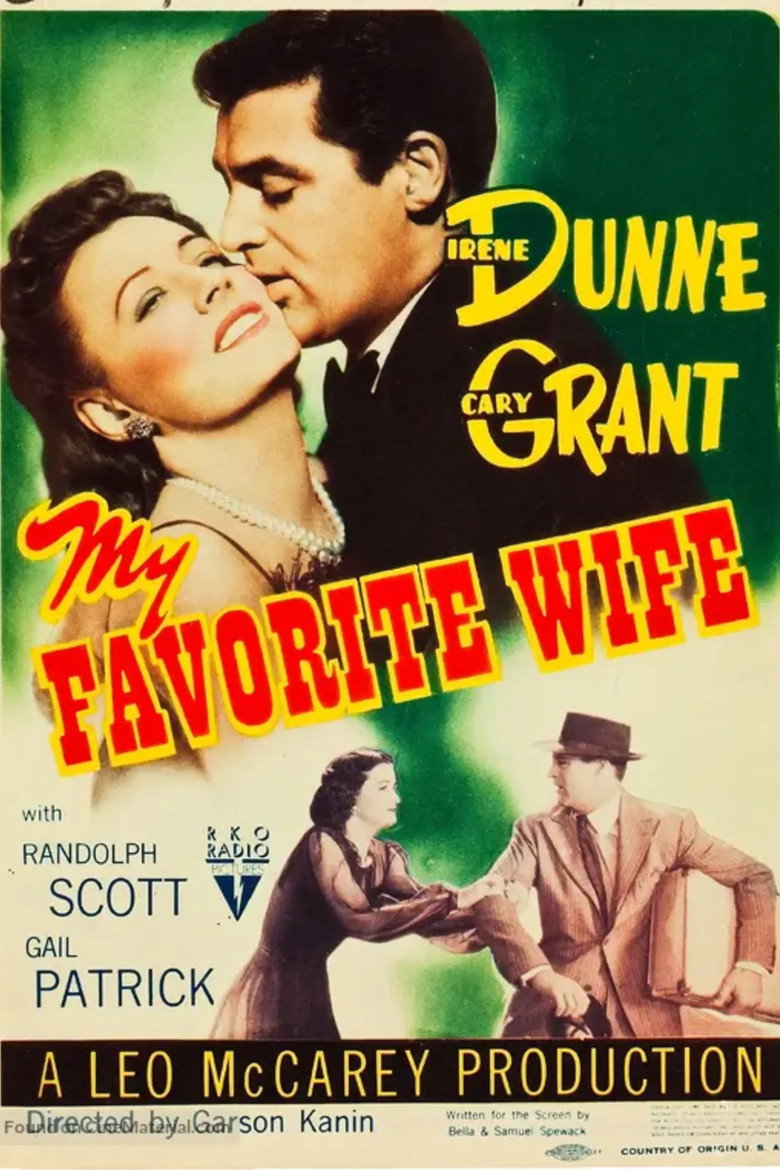
My Favorite Wife
Cary Grant and Irene Dunne reunite in one of Hollywood's greatest romantic comedies about marriage, misunderstanding, and finding love again.
Editorial ratings
- Cary Grant
- Story
- Direction
- Cinematography
- Entertainment
- Historical importance
Years after her ship disappeared, a presumably dead woman returns home. To her shock, she finds her husband has remarried.
Cary Grant plays Nick Arden, under the direction of Garson Kanin, released in 1940.
Introduction
Released in 1940, My Favorite Wife arrived during Cary Grant's Golden Age and reunited him with Irene Dunne after The Awful Truth.
The Story
Nick Arden believes his wife Ellen has died after being lost at sea. After rebuilding his life and remarrying, Ellen unexpectedly returns, forcing Nick to confront love, loyalty, and change.
Production & Behind the Scenes
RKO created a sophisticated romantic comedy built around the legendary Grant-Dunne partnership, Leo McCarey's story, and Garson Kanin's character-focused direction.
Cary Grant's Performance
Grant makes an impossible situation emotionally believable, balancing comedy, confusion, romance, and vulnerability while keeping Nick Arden sympathetic.
Direction & Themes
Garson Kanin explores change, second chances, marriage, identity, and the idea that love requires rediscovering one another.
Historical Context
The film represents the height of Hollywood's screwball comedy era and reflects changing ideas about relationships, independence, and romantic equality.
Legacy & Influence
Today My Favorite Wife is recognized as one of Cary Grant's essential romantic comedies and a landmark comedy of remarriage.
Gallery
Production & release
1937
Grant and Dunne achieve legendary status in The Awful Truth
1938
Grant continues Golden Age success
1940
My Favorite Wife released by RKO
1986
Film recognized as a classic romantic comedy
Collaborators.
Leo McCarey was born in 1898 in Los Angeles and began his film career in the silent era, working as a gag writer and director for Hal Roach Studios in the 1920s, where he is widely credited with pairing Stan Laurel and Oliver Hardy as a comedy team. His directing method, carried into features, favored improvisation: he preferred to arrive on set with a situation rather than a finished script and let his actors discover the scene in the moment. That approach produced two of Cary Grant's most acclaimed comedic performances. The Awful Truth (1937), starring Grant and Irene Dunne, won McCarey the Academy Award for Best Director and is considered a founding text of the screwball genre, its dialogue and physical comedy substantially improvised on set. Twenty years later, McCarey directed Grant again in An Affair to Remember (1957), a lush romantic drama opposite Deborah Kerr that was itself a remake of McCarey's own 1939 film Love Affair, starring Irene Dunne and Charles Boyer. McCarey's other major works include the Marx Brothers' Duck Soup (1933) and Going My Way (1944), for which he won two additional Academy Awards, for directing and for writing the original story, along with a Best Picture win as producer. His body of work spans nearly every major American comic register of the 1930s and 1940s. He died in 1969 in Santa Monica, California. McCarey is remembered as one of the defining architects of American screen comedy's tonal range, and his two very different films with Cary Grant — one a brittle marital farce, the other an unabashed tearjerking romance — demonstrate the breadth of Grant's range under a director he trusted to improvise.
Irene Dunne was born Irene Marie Dunn in 1898 in Louisville, Kentucky, and trained as a coloratura soprano before failing an audition for the Metropolitan Opera, a rejection that redirected her toward Broadway and then Hollywood. She arrived in film in the early 1930s already an accomplished singer, which shaped her early run of maternal melodramas and operettas, including Cimarron (1931), for which she received an Academy Award nomination. Dunne's gift, rarer than it sounds, was moving convincingly between registers: she could anchor a tearjerker like Penny Serenade (1941) and, in the same period, hold her own in the fastest screwball dialogue Hollywood produced. Leo McCarey's The Awful Truth (1937) proved decisive, pairing her improvisational precision with Cary Grant's and earning her one of her five Best Actress nominations; she never won a competitive Oscar despite the nominations, a fact often noted as one of the Academy's stranger oversights. She continued through the 1940s in prestige pictures such as I Remember Mama (1948), then retired from acting in 1952 while still a bankable star, turning to Republican Party activism and a UN delegate appointment under Eisenhower. She died in 1990 in Los Angeles. Dunne's reputation endures less through a signature role than through consistency: she rarely gave a careless performance, and film historians regularly cite her as the most technically accomplished comedienne of the era who never received the top prize her peers took for granted.
Randolph Scott was born Randolph Crane Scott in Orange County, Virginia, in 1898, and became, after decades of Western and adventure pictures, the defining star of the postwar American Western and one of the wealthiest men in Hollywood, having invested his earnings shrewdly in real estate and oil. Scott and Grant shared a Santa Monica beach house, on and off, for roughly a decade beginning around 1932, at various points while both were young contract actors establishing themselves in Hollywood. The arrangement is the most extensively examined domestic detail of Grant's private life, generating decades of speculation in later biographies and popular writing. The documented record itself is comparatively thin: contemporary fan-magazine photography treated the arrangement as an amusing bachelor household, and no verified first-person account from either man settles the question of its nature. This archive records that the two men shared a home for an extended period; it does not assert what has not been documented. Professionally, Scott and Grant appeared together in the screwball comedy My Favorite Wife (1940), in which Scott's character complicates the marital farce built around Grant and Irene Dunne. Scott's own later career moved decisively toward the Western, culminating in the seven films he made with director Budd Boetticher between 1956 and 1960 — lean, morally spare pictures now regarded among the finest of the genre — and in his final film, Sam Peckinpah's Ride the High Country (1962), made opposite Joel McCrea. Scott retired from acting after that film and died in 1987.
Cast.
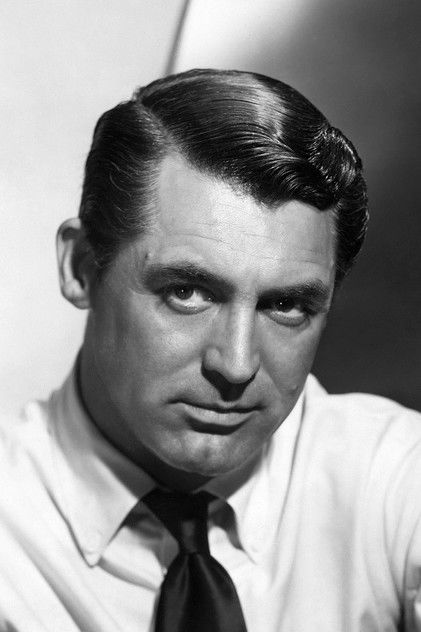
Cary Grant as Nick Arden
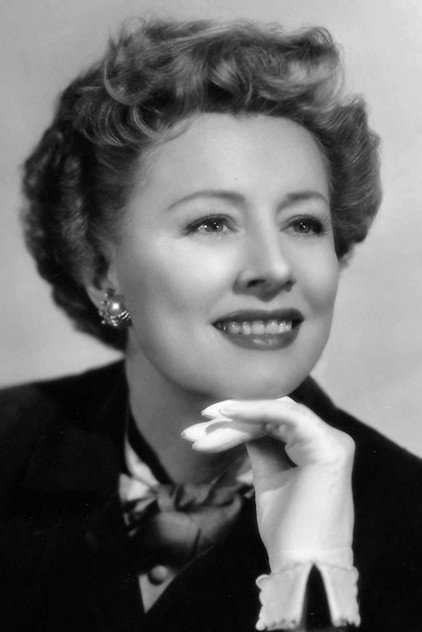
Irene Dunne as Ellen Wagstaff Arden
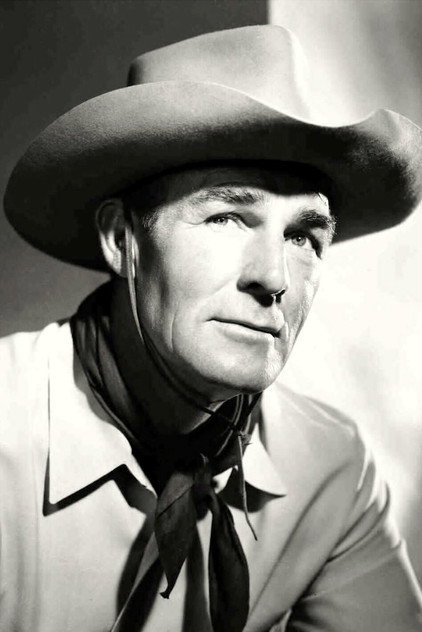
Randolph Scott as Steve Burkett
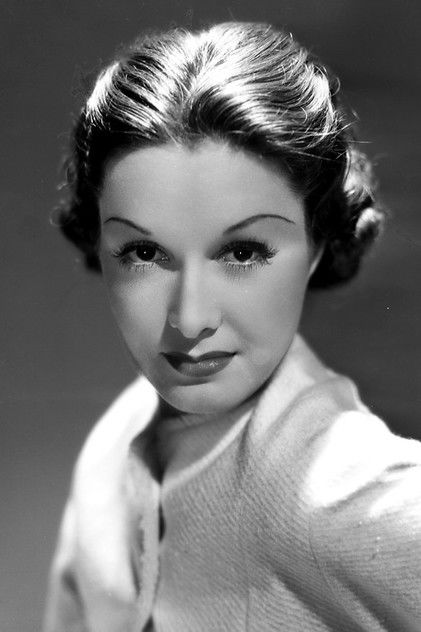
Gail Patrick as Bianca Bates
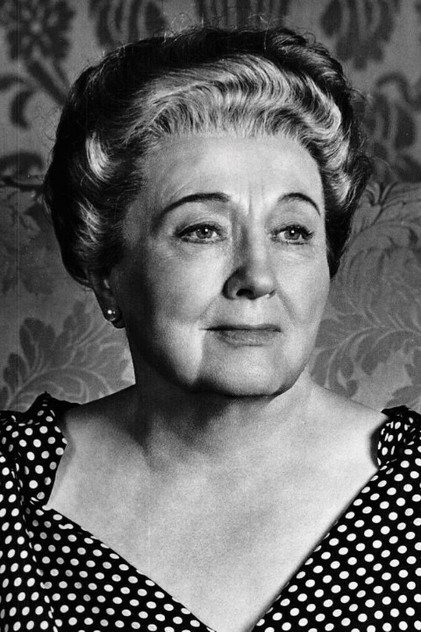
Ann Shoemaker as Ma
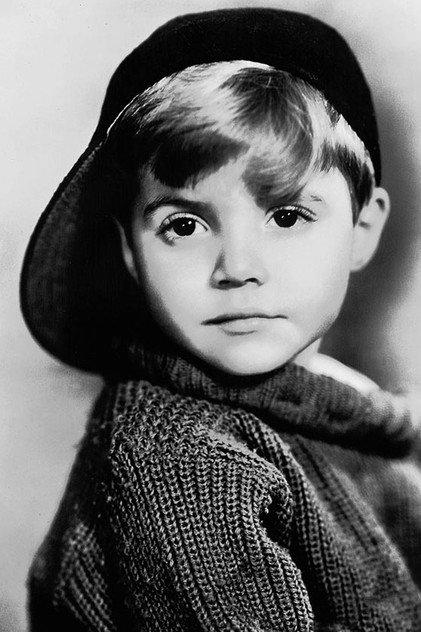
Scotty Beckett as Tim Arden
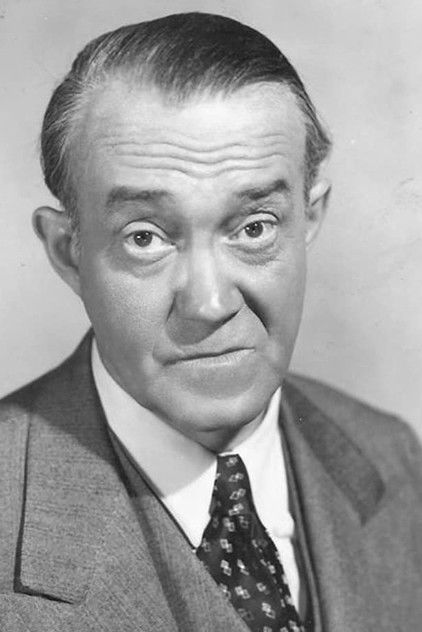
Donald MacBride as Hotel Clerk
Full billed cast of My Favorite Wife (1940).
Players in billing order, with the characters they play.
- Cary Grantas Nick Arden
- Irene Dunneas Ellen Wagstaff Arden
- Randolph Scottas Steve Burkett
- Gail Patrickas Bianca Bates
- Ann Shoemakeras Ma
- Scotty Beckettas Tim Arden
- Mary Lou Harringtonas Chinch Arden
- Donald MacBrideas Hotel Clerk
- Hugh O'Connellas Johnson
- Granville Batesas Judge Walter Bryson
- Pedro de Cordobaas Dr. Kohlmar
- Joe Cabrillasas Phillip (uncredited)
- Thelma Joelas Miss Rosenthal (uncredited)
- Hal Gerardas Assistant Court Clerk (uncredited)
- Cyril Ringas Nick's Lawyer (uncredited)
- Bert Moorhouseas Postponed Case Lawyer (uncredited)
- Clive Morganas Postponed Case Lawyer (uncredited)
- Jean Ackeras Postponed Case Witness (uncredited)
- Florence Dudleyas Postponed Case Witness (uncredited)
- Max Linderas Courtroom Spectator (uncredited)
- Horace McMahonas Truck Driver Giving Lift to Ellen (uncredited)
- Ronald R. Rondellas Bellboy #1 (uncredited)
- Russell Wadeas Bellhop (uncredited)
- Matty Roubertas Page Boy Paging Mr. Arden (uncredited)
- Bill Cartledgeas Page Boy Paging Burkett (uncredited)
- Edna Hollandas Johnny Weissmuller Inquirer (uncredited)
- Ellen Loweas Weissmuller Inquirer's Companion (uncredited)
- Chester Cluteas Shoe Salesman (uncredited)
- Leon Belascoas Waiter - Pacific Club Poolside (uncredited)
- Donald Kerras Poolside Waiter (uncredited)
- Franco Corsaroas Waiter Bringing Wine (uncredited)
- George Noisomas Page Boy Bringing Steve's Robe (uncredited)
- Sue Mooreas Maid Drying Ellen's Clothes (uncredited)
- Cy Kendallas Police Detective Arresting Nick (uncredited)
- Bob Reevesas Policeman Arresting Nick (uncredited)
- Earle Hodginsas Court Clerk Beside Judge Bryson (uncredited)
- Pat Westas Caretaker at Arden's Mountain Place (uncredited)
- Murray Alperas Yosemite Bartender (uncredited)
- Roque Guinartas Waiter (uncredited)
- Eli Schmudkleras Janitor (uncredited)
Crew.
- Art DirectionVan Nest Polglase
- DirectorGarson Kanin
- Director of PhotographyRudolph Maté
- EditorRobert Wise
- Original Music ComposerRoy Webb
- ProducerLeo McCarey
- ScreenplayBella Spewack
- ScreenplaySam Spewack
A quiet dispatch,
once a month.
One considered essay in your inbox each month. No promotions, no algorithms, no forwarding. Unsubscribe with a single click.
Other studies.
Cary Grant and Deborah Kerr headline an elegant romantic comedy exploring whether the perfect partner exists—or whether perfection itself is an illusion.
A thoughtful wartime satire blending romance, comedy, and commentary on celebrity culture.
Cary Grant and Audrey Hepburn create one of cinema's most elegant romantic mysteries—a thrilling game of deception, danger, and unexpected love.