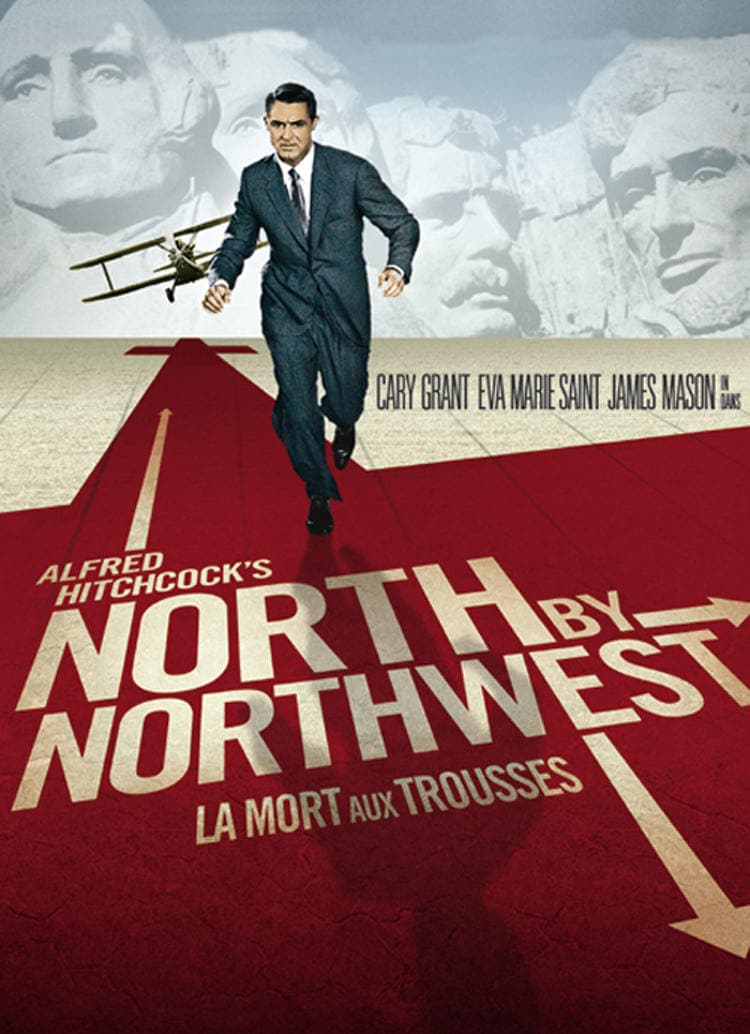
North by Northwest
Alfred Hitchcock's masterful thriller paired with Cary Grant's most iconic performance created one of the greatest adventure films ever made.
Editorial ratings
- Cary Grant
- Story
- Direction
- Cinematography
- Entertainment
- Historical importance
Advertising man Roger Thornhill is mistaken for a spy, triggering a deadly cross-country chase.
Cary Grant plays Roger Thornhill, under the direction of Alfred Hitchcock, released in 1959.
Featured quote
“Roger Thornhill isn't a spy. He's an ordinary man discovering extraordinary courage.”
The Story
Roger O. Thornhill, a smooth, twice-divorced Madison Avenue advertising executive, is mistaken for a nonexistent government agent named George Kaplan when a hotel waiter pages the wrong name at the wrong moment. Kidnapped by the henchmen of the elegant, ruthless Phillip Vandamm, Thornhill is interrogated at a Long Island estate, force-fed bourbon, and set loose in a car meant to kill him in a staged accident. Unable to convince the police, his mother, or anyone else of what has happened, he sets out to find the real Kaplan, only to be photographed apparently murdering a diplomat at the United Nations.
Fleeing west aboard the 20th Century Limited, Thornhill falls in with the cool, ambiguous Eve Kendall, who conceals him from the police and then leads him into an open Indiana cornfield where a crop-dusting biplane tries to gun him down — one of the most celebrated set pieces in American cinema. He eventually learns that Kaplan is a decoy invented by American intelligence to protect their actual operative, Kendall herself, who is secretly working undercover inside Vandamm's organization. Thornhill's efforts to expose Vandamm and save Kendall culminate in a chase across the carved stone faces of Mount Rushmore, ending with the two of them, now married, retreating into the safety of a train sleeping berth as it enters a tunnel.
Cary Grant's Thornhill is the definitive expression of his mature screen persona: urbane, quick with a line, visibly rattled but never undignified, propelled through implausible danger while remaining, at every moment, recognizably himself. It is widely regarded as the role that most completely fused the actor with the archetype he had spent three decades constructing.
Production Context
North by Northwest originated when composer Bernard Herrmann introduced Alfred Hitchcock to screenwriter Ernest Lehman while the director was stalled on an adaptation of The Wreck of the Mary Deare for Metro-Goldwyn-Mayer. Lehman, frustrated with that project, told Hitchcock he wanted instead to write "the Hitchcock picture to end all Hitchcock pictures." The two men built the story from fragments Hitchcock had nursed for years, including a long-held ambition to stage a chase across the presidential faces of Mount Rushmore and a murder set inside the United Nations. For the film's engine, Hitchcock recalled an anecdote about wartime deception operations in which intelligence services invented a fictitious officer to mislead the enemy; Lehman turned this into the decoy agent "George Kaplan," the empty name around which the entire plot revolves. Lehman also reshaped the protagonist, originally conceived along the lines of a travelling salesman suited to James Stewart, into a Madison Avenue advertising executive, a profession Lehman himself had once worked in.
Filming in 1958 took the company from the Plaza Hotel and the United Nations Plaza in New York (the UN sequence was shot clandestinely with a hidden camera after officials refused permission) to Chicago's LaSalle Street Station, a cornfield near Wasco, California standing in for rural Indiana, and finally to the Mount Rushmore National Memorial itself, where the National Park Service permitted only limited filming inside the visitor center; the climactic scenes on the presidents' faces were achieved through matte paintings and a soundstage set built in Culver City. Robert Burks shot the film in VistaVision, Bernard Herrmann supplied a propulsive fandango-inflected score, and graphic designer Saul Bass devised the kinetic title sequence of sliding grid lines that has since become one of the most imitated openings in film history. Grant, at fifty-five, negotiated a fee reported near $450,000 plus a share of the profits, reflecting his position as Hollywood's most bankable leading man of the era and Hitchcock's fourth and final collaborator on a project the director had shepherded for nearly a decade.
Why It Mattered Then
Released on July 1, 1959, North by Northwest was an immediate commercial triumph, opening at number one at the American box office and holding a seven-week run at Radio City Music Hall, where it broke the venue's non-holiday opening-week record. Critics recognized it at once as a synthesis of everything audiences had come to expect from Hitchcock — mistaken identity, an innocent man pursued, a dangerous blonde of uncertain loyalty, and suspense built from ordinary settings turned menacing — delivered with unusual wit and polish. The New York Times called it the year's "most scenic, intriguing and merriest chase" and singled out Grant's handling of "the grimaces, the surprised look, the quick smile...with professional aplomb and grace," while Time praised the picture as "smoothly troweled and thoroughly entertaining."
For Grant, arriving after The Bishop's Wife, To Catch a Thief and An Affair to Remember, the film confirmed that he could still command the screen as an all-purpose leading man well into his fifties, holding his own against a director notorious for treating actors as instruments of composition rather than collaborators. It marked the fourth and last time Grant worked with Hitchcock, following Suspicion, Notorious and To Catch a Thief, and stood as a capstone to one of the most consequential actor-director partnerships of the studio era. The film earned three Academy Award nominations, for Ernest Lehman's original screenplay, art direction, and film editing.
Why It Matters Today
North by Northwest is now routinely cited among the greatest films ever made and was inducted into the National Film Registry by the Library of Congress in 1995 for its cultural, historical and aesthetic significance. Its crop-duster attack, its Mount Rushmore climax, and Saul Bass's title sequence have become part of the language of cinema itself, referenced and imitated across decades of thrillers, and its structure — an ordinary man plunged into an escalating international conspiracy he does not understand — is widely credited as a direct forerunner of the James Bond series and the modern spy-action film more broadly. GQ magazine's panel of style experts later named the grey suit Grant wears through nearly the entire picture the best and most influential suit in film history, a testament to how thoroughly the film fused his persona with a visual template still copied today.
For students of Grant's career, the film represents the fullest late-period expression of the star he had spent thirty years building: never merely handsome or merely funny, but a figure whose wit, physical control and underlying vulnerability could carry a story through kidnapping, framed murder, aerial assault and a fight for survival on a national monument without ever losing charm or credibility. Watched today, it stands as both the summit of the Hitchcock-Grant collaboration and one of the clearest arguments for why Cary Grant remains the model against which screen sophistication is measured.
Gallery
Collaborators.
Alfred Hitchcock was born in Leytonstone, east London, in 1899, the son of a greengrocer, and entered the film industry in 1919 designing title cards before directing his first film, The Pleasure Garden, in 1925. By the early 1930s he was already known in Britain as the "master of suspense" for films such as The Man Who Knew Too Much and The 39 Steps, and in 1939 producer David O. Selznick brought him to Hollywood, where Rebecca (1940) won the Academy Award for Best Picture in his first American year. Over the following four decades Hitchcock built the most recognisable directorial identity in commercial cinema: the audience implicated in guilt and voyeurism, the ordinary man wrongly accused, the blonde heroine in danger, and a visual grammar of subjective camera and precise editing that he called "pure cinema." He was equally shrewd about his own image, hosting Alfred Hitchcock Presents on television from 1955 and cultivating the silhouette and deadpan persona that made him one of the few directors as famous as his stars. His four films with Cary Grant, spread across eighteen years, form one of the most studied actor-director partnerships in film history. Hitchcock used Grant's established charm as raw material to be complicated and, at times, weaponised — casting him as a possible wife-murderer in Suspicion, a compromised government agent in Notorious, a reformed jewel thief in To Catch a Thief, and an innocent man mistaken for a spy in North by Northwest. Each film asked audiences to hold their trust in Grant's likability against genuine suspicion of his character, a tension only Hitchcock exploited so directly. Hitchcock received an Academy Honorary Award in 1968 and was knighted shortly before his death in 1980, closing a career that had produced more influential and imitated films than perhaps any director's in the history of the medium.
Eva Marie Saint trained at the Actors Studio in New York and worked extensively in live television drama before her film debut in Elia Kazan's "On the Waterfront" (1954), opposite Marlon Brando. That first screen role won her the Academy Award for Best Supporting Actress, an unusually immediate consecration for a newcomer. She went on to a long, steady career across film and television rather than a run of immediate star vehicles, appearing in "Raintree County" (1957) and later in "Exodus" (1960). Her collaboration with Alfred Hitchcock on "North by Northwest" (1959) placed her opposite Cary Grant as Eve Kendall, a role written with deliberate sexual frankness for the period, and remains her best-remembered part. Saint continued working steadily for decades afterward, including television roles into the 2000s, and received an Emmy Award and further nominations across her career. She was among the last surviving major cast members of "North by Northwest" and of the classic Actors Studio generation, living to nearly one hundred years old.
James Mason was born in 1909 in Huddersfield, Yorkshire, and educated at Cambridge University, where he read architecture before turning to acting against his family's wishes. He built a stage career in Britain through the 1930s and became one of the country's biggest box-office draws of the wartime years in melodramas such as The Man in Grey (1943) and The Wicked Lady (1945), often cast as a brooding, cultivated cad. He moved to Hollywood in 1947 and spent the rest of his career working on both sides of the Atlantic, refusing to be typed as either purely British or purely American in his roles. His American period produced some of his most enduring work: he received an Academy Award nomination for Best Actor for A Star Is Born (1954) opposite Judy Garland, played Humbert Humbert in Stanley Kubrick's Lolita (1962), and portrayed the smooth, sinister spy Phillip Vandamm opposite Cary Grant in Alfred Hitchcock's North by Northwest (1959). Mason worked prolifically into the 1980s, appearing in The Verdict (1982) opposite Paul Newman, for which he received his second Academy Award nomination, this time for Best Supporting Actor. He died in 1984 in Lausanne, Switzerland, having appeared in well over 100 films. His legacy rests on a distinctive quality rare among leading men of his generation: an ability to make intelligence itself seem dangerous, delivered in one of the most recognizable voices in film history, its clipped, purring cadence imitated by impressionists for decades.
Bernard Herrmann was born Max Herman in New York City on 29 June 1911, the son of Jewish immigrants from Russia. He studied at New York University and the Juilliard School, and by his early twenties was composing and conducting for CBS Radio, where he led the CBS Symphony Orchestra and worked closely with Orson Welles on the Mercury Theatre on the Air, including the 1938 "War of the Worlds" broadcast. That collaboration carried into film: Herrmann's first score was for Welles's Citizen Kane (1941), for which he received an Academy Award nomination, and the same year he won the Oscar for The Devil and Daniel Webster. Through the 1940s and 1950s he built a body of concert and film work marked by unconventional orchestration — low brass, unusual string writing, ostinato figures repeated to hypnotic effect — that departed sharply from the lush Romantic idiom of most Hollywood scoring of the period. His most celebrated period was his partnership with Alfred Hitchcock, beginning with The Trouble with Harry (1955) and running through Vertigo (1958), North by Northwest (1959), Psycho (1960) and Marnie (1964). The screeching string figure he wrote for Psycho's shower scene, over Hitchcock's initial instruction that the scene have no music at all, became one of the most recognized passages in film history. The partnership ended in 1966 when Hitchcock, under studio pressure to modernize, rejected Herrmann's score for Torn Curtain and fired him; the two men never spoke again. Herrmann continued scoring films into the 1970s, including Truffaut's Fahrenheit 451 (1966) and Scorsese's Taxi Driver, which he completed the day before he died in Los Angeles on 24 December 1975. It was released the following year and earned him a posthumous Academy Award nomination.
Robert Burks was born in Chino, California, in 1909 and became Alfred Hitchcock's regular cinematographer, shooting twelve of the director's films across thirteen years from Strangers on a Train (1951) to Marnie (1964), a run interrupted only by Psycho, which Hitchcock shot with his television crew. Burks photographed two of the films that most fixed Grant's screen image in its final, most polished form. To Catch a Thief (1955), shot largely on location on the French Riviera opposite Grace Kelly, used Burks's VistaVision color photography to turn Grant, at fifty-one, into an image of tanned, tailored ease against the Mediterranean coastline; the film won Burks the Academy Award for Best Cinematography. North by Northwest (1959) followed, its widescreen compositions — the Mount Rushmore climax, the crop-duster sequence shot on an open Indiana highway — becoming some of the most recognizable images in Grant's entire career. Burks's other credits with Hitchcock include Rear Window (1954), Vertigo (1958) and The Birds (1963), giving him a hand in shaping the visual identity of Hitchcock's most celebrated decade. He worked in Technicolor, VistaVision and a range of aspect ratios, adapting his lighting and camera style to each film's demands rather than imposing a single signature look. Burks died in a house fire in Fresno, California, in 1968, along with his wife, ending a partnership with Hitchcock that had defined an era of American studio cinematography.
Ernest Lehman began his career as a Broadway press agent and short-story writer before turning to screenwriting in the 1950s, bringing an insider's eye for showbusiness cynicism to his early scripts. His novella "Tell Me About It Tomorrow" became the basis for "Sweet Smell of Success" (1957), which he co-wrote with Clifford Odets, a portrait of a vicious Broadway columnist widely regarded as one of the sharpest American screenplays of its decade. Lehman worked across an unusually wide range of genres and tones — adapting Tennessee Williams for "The Sweet Bird of Youth" era, writing the espionage thriller that became "North by Northwest" (1959) directly for the screen at Alfred Hitchcock's request, and later adapting large-scale musicals including "West Side Story" (1961) and "The Sound of Music" (1965), both of which he also produced. He received Academy Award nominations for "Sabrina" (1954), "North by Northwest" (1959), "West Side Story" (1961), and "Who's Afraid of Virginia Woolf?" (1966), which he also produced and which was the first film he directed. In 2001 he became the first screenwriter to receive an Honorary Academy Award for career achievement, recognition of a body of work that moved fluently between comedy, thriller, and musical.
Cast.
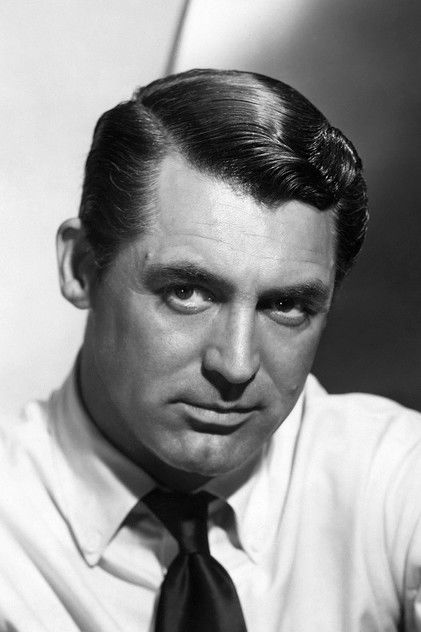
Cary Grant as Roger Thornhill
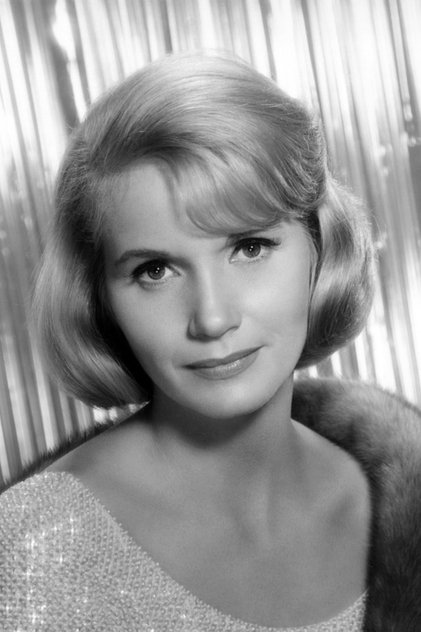
Eva Marie Saint as Eve Kendall
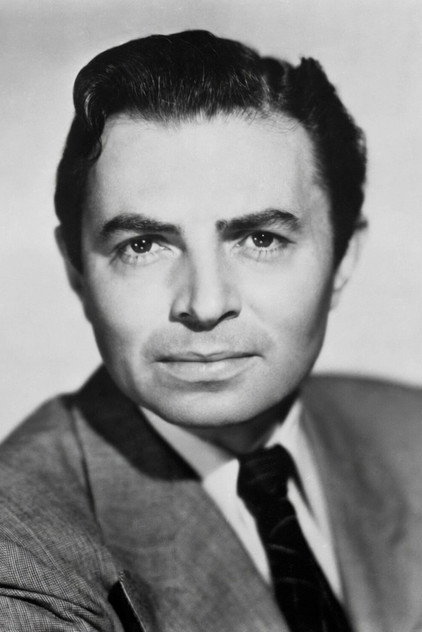
James Mason as Phillip Vandamm
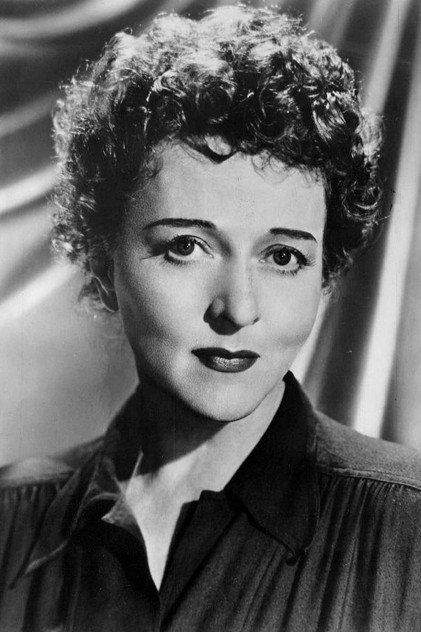
Jessie Royce Landis as Clara Thornhill
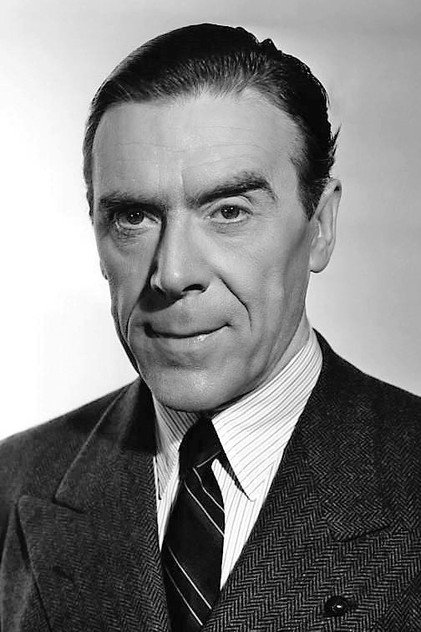
Leo G. Carroll as Professor
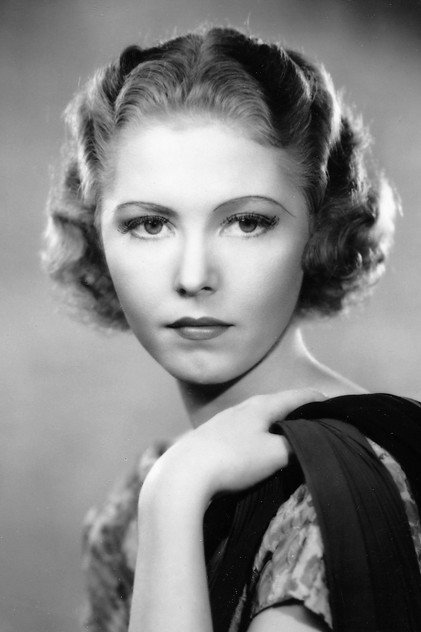
Josephine Hutchinson as Mrs. Townsend
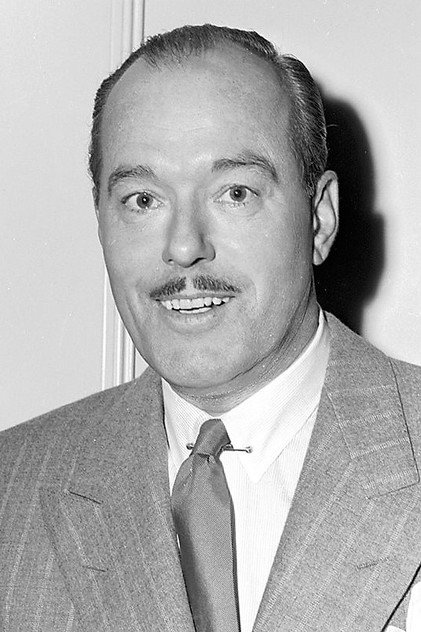
Philip Ober as Lester Townsend
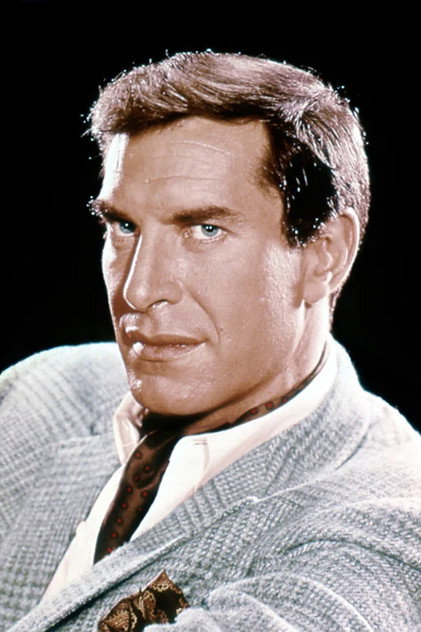
Martin Landau as Leonard
Full billed cast of North by Northwest (1959).
Players in billing order, with the characters they play.
- Cary Grantas Roger Thornhill
- Eva Marie Saintas Eve Kendall
- James Masonas Phillip Vandamm
- Jessie Royce Landisas Clara Thornhill
- Leo G. Carrollas Professor
- Josephine Hutchinsonas Mrs. Townsend
- Philip Oberas Lester Townsend
- Martin Landauas Leonard
- Adam Williamsas Valerian
- Edward Plattas Victor Larrabee
- Robert Ellensteinas Licht
- Les Tremayneas Auctioneer
- Philip Coolidgeas Dr. Cross
- Patrick McVeyas Sergeant Flamm
- Edward Binnsas Captain Junket
- Ken Lynchas Charley
- Nora Marloweas Anna, the Menacing Housekeeper (uncredited)
- Doreen Langas Maggie - Thornhill's Secretary (uncredited)
- John Beradinoas Sergeant Emile Klinger (uncredited)
- Ned Glassas Ticket Seller (uncredited)
- Tol Averyas State Police Detective (uncredited)
- Malcolm Atterburyas Man at Prairie Crossing (uncredited)
- Maudie Prickettas Hotel Maid Elsie (uncredited)
- Bess Flowersas Plaza Hotel Lounge Patron (uncredited)
- Stanley Adamsas Lieutenant Harding (uncredited)
- Andy Albinas Farmer (uncredited)
- Ernest Andersonas Porter on Twentieth Century Ltd. (uncredited)
- Frank Wilcoxas Herman Weltner (uncredited)
- Brandon Beachas Man at Auction (uncredited)
- Steve Carruthersas Man at Auction (uncredited)
- Taggart Caseyas Shaving Man (uncredited)
- Bill Catchingas Auction Attendant (uncredited)
- Walter Coyas U.S. Intelligence Agency Official (uncredited)
- Jimmy Crossas Taxi Driver #1 (uncredited)
- Patricia Cuttsas Hospital Patient (uncredited)
- Jack Dalyas Train Steward (uncredited)
- John Damleras Police Lieutenant (uncredited)
- Lawrence Dobkinas U.S. Intelligence Agency Official (uncredited)
- Tommy Farrellas Eddie - Elevator Starter (uncredited)
- Jesslyn Faxas Train Passenger (uncredited)
Crew.
- Art DirectionMerrill Pye
- Art DirectionWilliam A. Horning
- DirectorAlfred Hitchcock
- Director of PhotographyRobert Burks
- EditorGeorge Tomasini
- Original Music ComposerBernard Herrmann
- ProducerAlfred Hitchcock
- Production DesignRobert F. Boyle
- WriterErnest Lehman
Quotations from North by Northwest
The Quotebook →“Ah, Maggie, in the world of advertising, there’s no such thing as a lie. There’s only the expedient exaggeration.”
Cary Grant as Roger Thornhill · 1959VerifiedSpoken as Roger Thornhill in North by Northwest (1959).
“Now you listen to me, I’m an advertising man, not a red herring. I’ve got a job, a secretary, a mother, two ex-wives and several bartenders dependent upon me, and I don’t intend to disappoint them all by getting myself slightly killed.”
Cary Grant as Roger Thornhill · 1959VerifiedSpoken as Roger Thornhill in North by Northwest (1959).
A quiet dispatch,
once a month.
One considered essay in your inbox each month. No promotions, no algorithms, no forwarding. Unsubscribe with a single click.
Other studies.
Cary Grant and Deborah Kerr headline an elegant romantic comedy exploring whether the perfect partner exists—or whether perfection itself is an illusion.
A thoughtful wartime satire blending romance, comedy, and commentary on celebrity culture.
Cary Grant and Audrey Hepburn create one of cinema's most elegant romantic mysteries—a thrilling game of deception, danger, and unexpected love.